
Your shoulder has ached for two years. Or maybe an old surgery scar still pulls and burns every time you stretch. Then someone mentions that a few tiny shots might help, and your mind jumps straight to questions. Where do the shots go? Will it hurt? What happens in that room?
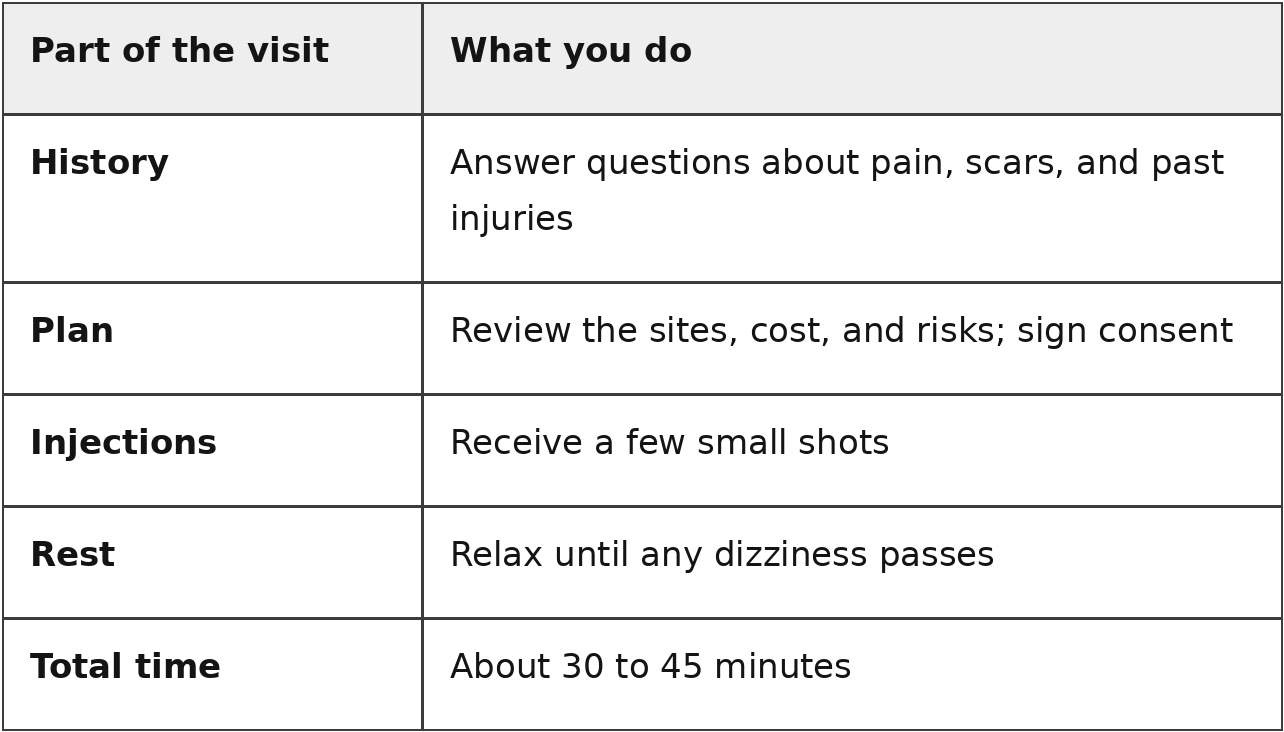
Questions like that are normal. Almost everyone feels a little nervous before a first neural therapy treatment. The visit is calmer than most people expect, though. You talk with a provider, get a handful of small injections with a very thin needle, and rest for a few minutes. The whole thing usually takes 30 to 45 minutes.
This guide walks you through the full visit, from packing your questions to the minutes after you walk out. It comes from us at Learn Neural Therapy, a Portland team that trains healthcare providers in these injection methods. Stick around and you’ll know what to expect, what to ask, and when to call your clinic.
Neural Therapy vs. Perineural Injection Therapy: What’s the Difference?
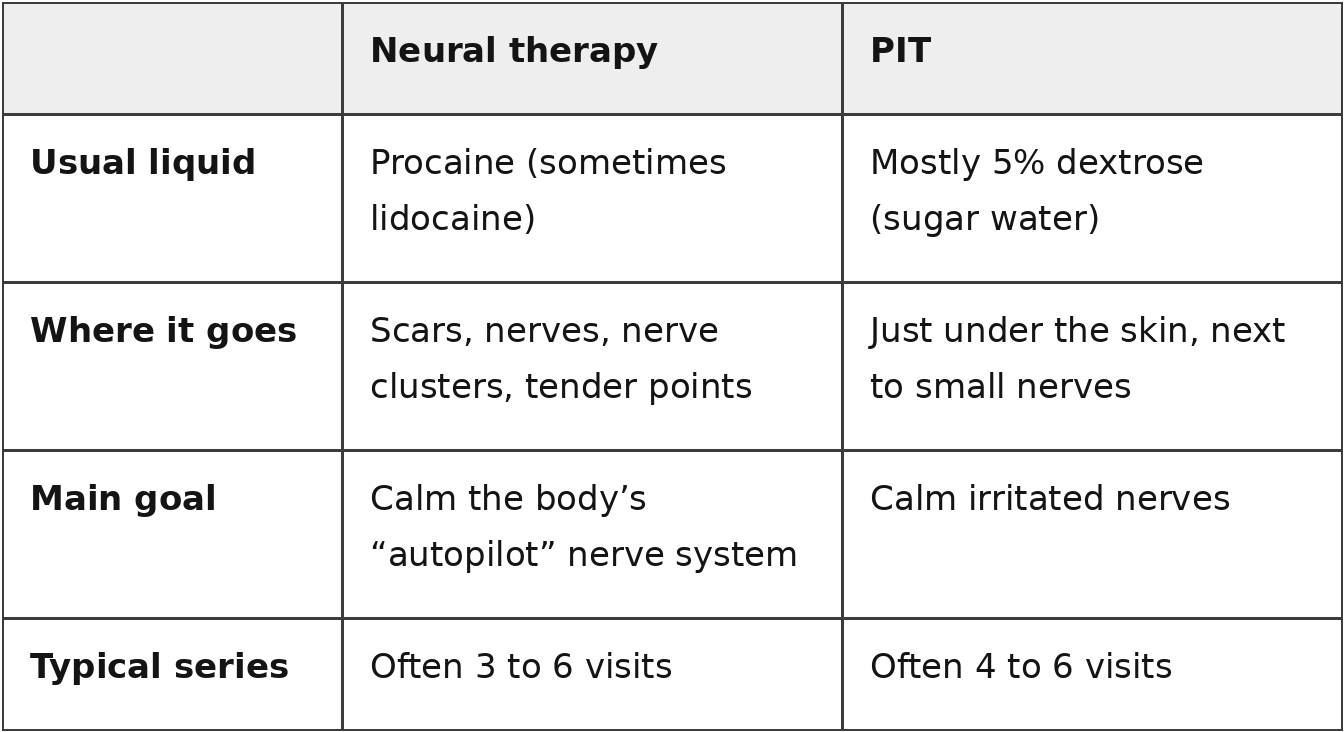
Neural therapy is a treatment where a provider injects a small amount of numbing medicine, usually procaine, into scars, nerves, and sore spots. The goal is to calm nerve signals that got stuck on “high” after an injury or surgery. Procaine is a close cousin of the Novocaine at your dentist’s office. A neural therapist leaves out the extras, like preservatives and epinephrine.
You may also read about perineural injection therapy (PIT). The names sound alike, but the methods differ. Ask your provider which one you’re getting.
How to Get Ready for Your Visit
You don’t need to fast or buy anything special. A little prep still makes the day smoother.
Write down your story
Bring a list of your surgeries, accidents, scars, dental work, and medicines. Neural therapists hunt for old injuries that may still be sending odd signals, so details help. Even a scar from a childhood fall counts.
Mention any allergies
Tell the clinic if numbing medicine like Novocaine or lidocaine ever gave you trouble. People with those allergies usually can’t have this care, so this step keeps you safe.
Wear loose clothes
Most shots go in without you undressing. If a spot is hard to reach, you’ll get a gown or drape. Comfortable clothing makes the day of your neural therapy treatment easier from the start.
Your First Neural Therapy Treatment, Step by Step
Step 1: Talk through your health history
Your provider starts with questions. Expect to talk about your pain, when it began, and any scars, surgeries, or hard life events you feel okay sharing. This part can feel long, and that’s a good sign. A careful history helps your provider pick the right spots.
Step 2: Review the plan & sign consent
Next you’ll hear the plan: where the shots go, what’s in them, and what you might feel. Ask about the price now. Insurance plans usually don’t pay for this care, so most people cover it themselves. Your provider will also explain the risks before you sign a consent form.
Step 3: Ask for a test shot if you’re nervous
Worried about a reaction? Some providers give one tiny test injection first. It shows you how the shot feels and how your body responds, and many people say it helps them relax.
Step 4: Get your neural therapy injection
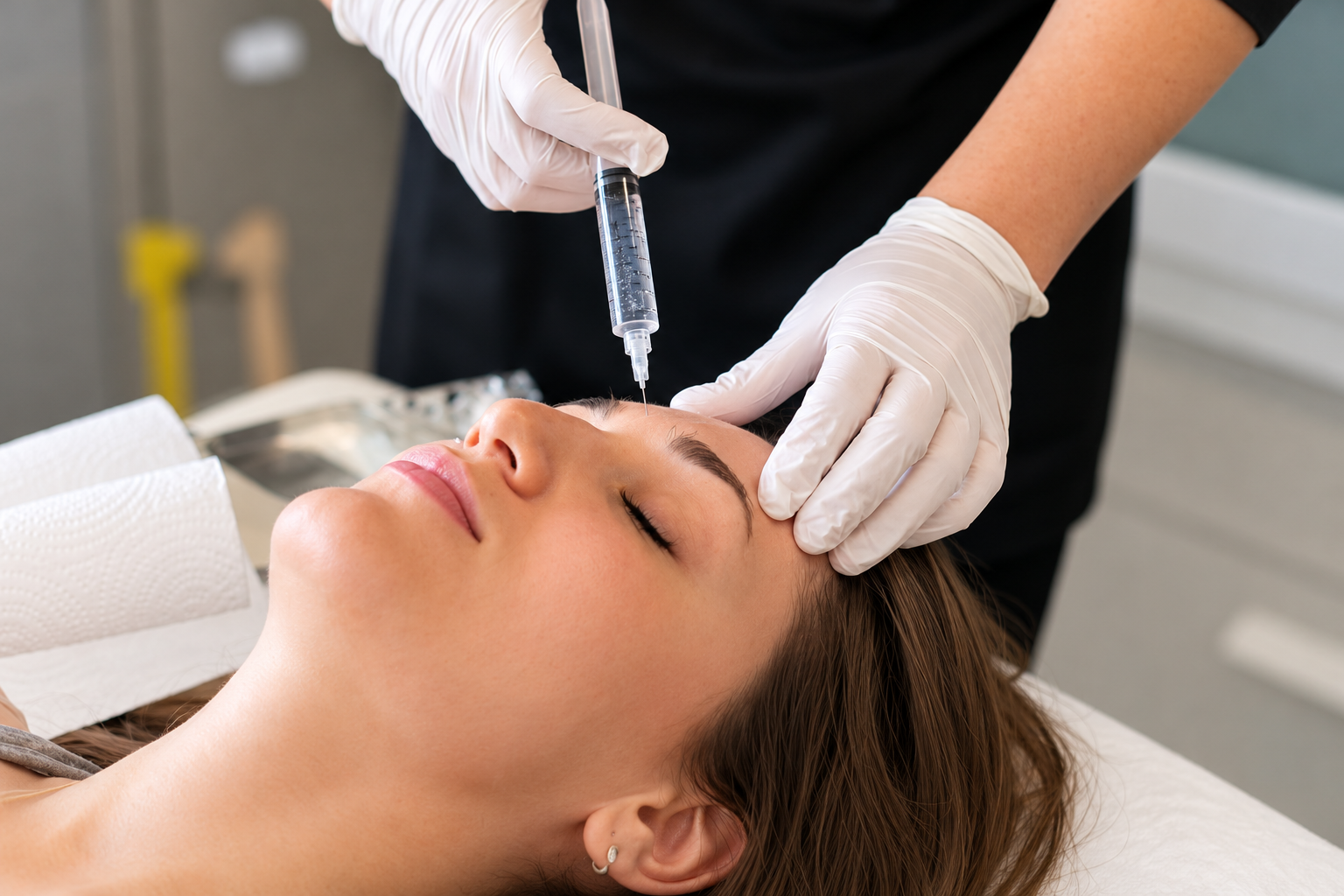
Your provider cleans the skin and uses a very fine needle. You might get several small shots in a row, mostly just under the skin. Some spots need a deeper one. Your provider will explain each move as it happens, and the area goes numb fast.
Step 5: Rest & check in
Afterward, you stay put for a bit. Procaine can make you feel lightheaded, because it nudges your body out of fight-or-flight mode. That feeling usually fades within about 10 minutes, and your provider keeps an eye on you until it does.
Step 6: Leave with an aftercare plan
Before you go, you’ll get simple tips. These include resting, drinking extra water, and sometimes supplements that help your body clear waste. You’ll also pick a time for a follow-up.
Does a Neural Therapy Injection Hurt?
Most people compare a neural therapy injection to a mosquito bite. Some areas sting more than others, though. Spots with lots of nerve endings, and thick scars, tend to hurt more. The pinch is short, because procaine starts numbing the area quickly.
You might also feel warm, sleepy, or a little emotional. A few people laugh or cry after their shots, and that’s okay. In one study of patients, reactions like these lasted minutes to hours, and no longer than two days.
What Happens After Your Treatment
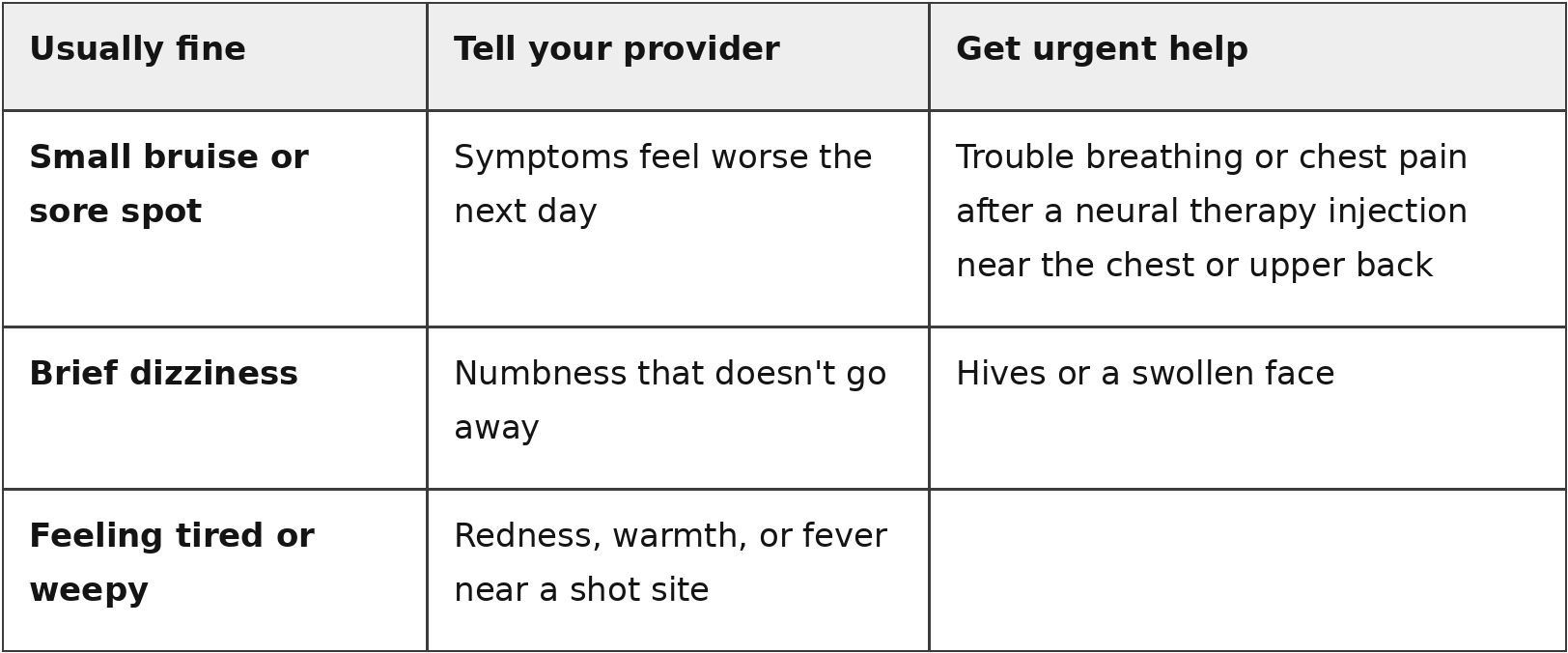
Some people feel a bit worse for a day before they feel better. Providers sometimes call this a Herxheimer reaction, and they can suggest ways to support you through it. If you’re unsure about anything, call your clinic. That’s what they’re there for.
How Many Visits Will You Need & What Does It Cost?
One visit rarely tells the whole story. Some people feel better right away, while others improve step by step. Many providers see about three to six visits as typical, but your plan may be shorter or longer. After each neural therapy treatment, your provider asks what percent better you feel, and that number guides the next move.
As for price, a single session runs roughly $120 to $450, depending on location and how many spots get treated. Since insurance rarely helps, ask for a clear price before you book.
Is Neural Therapy Treatment Right for You?
Let’s be straight with each other. This approach has a long history in Europe, and plenty of patients and providers like it. But most research so far is small, and insurers still call it experimental. Larger studies are needed. Allergic reactions are possible, and repeated injections may leave scarring in some cases. Talk with your regular doctor first, especially if you have new numbness, weakness, or pain you can’t explain. Those signs can point to a problem that needs different care.
How to Find a Trained Provider
Skill matters with any injection. Ask where your provider trained, how long they’ve offered this care, and which liquid they use. Ask what the plan looks like and what it will cost.
Learn Neural Therapy keeps a Find a Provider list with practitioners in Oregon, New Mexico, New Hampshire, Vermont, and Vancouver. Are you a clinician who wants to offer these injections? Dr. Anne Hill, ND, and Dr. Ilana Gurevich, ND, LAc, teach in-person and online classes for MDs, DOs, NDs, NPs, PAs, chiropractors, and acupuncturists.
Ready for Your First Visit?
Your first neural therapy treatment doesn’t need to be a mystery. You’ll talk, get a few small shots, rest for a few minutes, and head home with a plan. Share your full health story, ask plenty of questions, and give the process a few visits before you judge it.
Ready to take the next step? Visit Learn Neural Therapy today to find a trained provider near you. Are you a clinician? Browse our classes and bring this care to your own patients.
FAQs
Does neural therapy treatment hurt?
Most people say it feels like a mosquito bite. Thick scars and sensitive spots may sting more, but the numbing starts fast.
How long does the first visit take?
Plan on 30 to 45 minutes. That includes the talk beforehand and a short rest afterward.
Can I go back to work afterward?
Many people return to normal activity once any lightheadedness passes. Ask your provider, since it depends on the spots treated.
How is it different from a nerve block or PIT?
A nerve block numbs the area that hurts. This treatment can also go into scars or points far from the pain. PIT, short for perineural injection therapy, mostly uses dextrose placed next to small nerves under the skin.