Blog
Stay informed with expert insights on neural therapy and regenerative medicine.
Explore articles, case studies, and practical tips designed for healthcare providers who want to deepen their understanding and improve patient outcomes.

What Is Neural Therapy? Key Principles, How It Works & What It Treats
Chronic pain and functional disorders remain among the most challenging conditions in clinical practice, particularly when conventional treatments fail to provide sustained relief. Chronic pain affects approximately 20% of adults globally, making it one of the leading causes of disability worldwide.
Increasingly, attention has shifted toward Neural therapy treatments that address neurophysiological dysfunction at its source rather than simply suppressing symptoms.
Rooted in both conventional and integrative medicine, the therapy focuses on the autonomic nervous system (ANS) and its role in regulating inflammation, pain perception, and tissue healing.
Let’s discuss What is Neural Therapy, its principles, procedures, relevance in 2026, and much more.
What Is Neural Therapy?
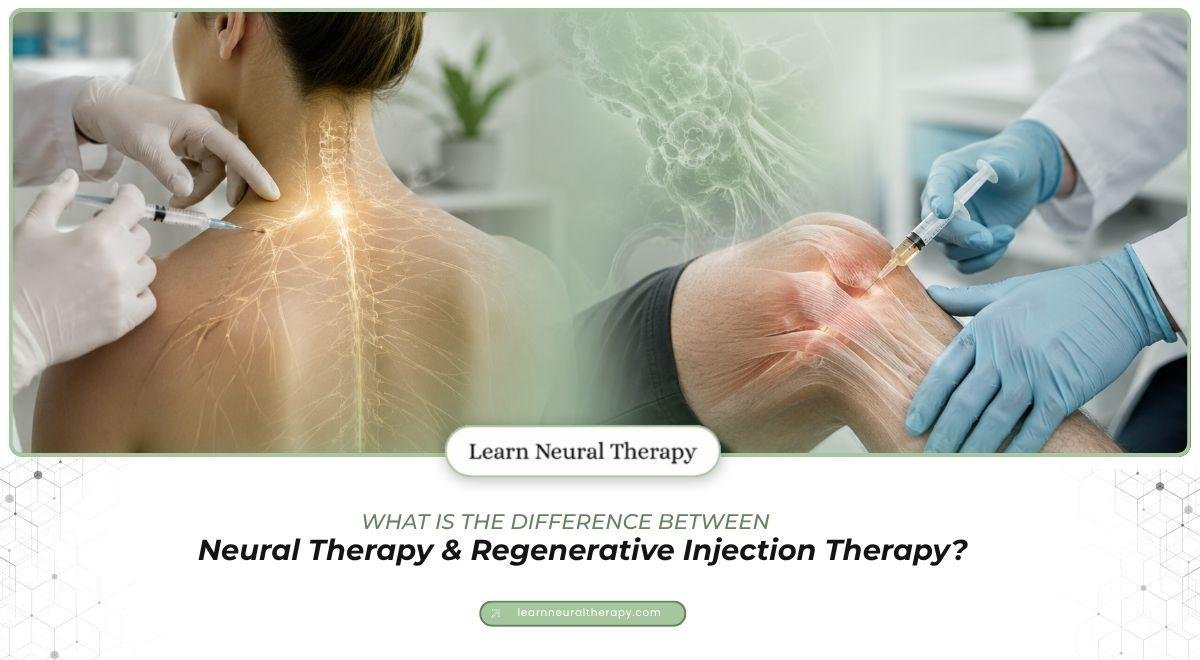
Neural therapy is a medical treatment that involves injecting local anesthetics into specific tissues to modulate autonomic nervous system activity, normalise nerve signalling, and support functional restoration. It is commonly used in the management of chronic pain and neurogenic dysfunction.
These include- Cutaneous scars, Myofascial trigger points, Peripheral nerves, and Autonomic ganglia
Rather than acting purely as an analgesic intervention, neural therapy aims to restore normal membrane potentials and regulate dysfunctional neural circuits, particularly within the autonomic nervous system.
Developed in Europe, Neural therapy treatment has been integrated into pain management, sports medicine, and functional medicine settings, where it is used to address both localised and systemic dysfunction.
Key Principles
Research shows that central sensitisation contributes to 30-50% of chronic pain conditions, underscoring the importance of nervous system-focused therapies.
1. Neurophysiological Regulation of the Body
All organ systems are regulated through complex interactions within the central and autonomic nervous systems. Disruptions in these signalling pathways can lead to persistent dysfunction.
2. Interference Fields and Dysautonomia
An “interference field” refers to a chronically irritated tissue, such as a scar, infection site, or injured structure, that generates aberrant afferent signals.
These signals may contribute to persistent pain, changes in autonomic nervous system activity, and symptoms that are felt in areas distant from the original source.
3. Membrane Stabilisation and Signal Modulation
Local anesthetics used in neural therapy are thought to stabilise depolarised cell membranes, restoring normal electrical gradients and interrupting pathological reflex arcs.
4. Segmental and Reflex-Based Treatment
Neural therapy specialists often utilize segmental approaches based on dermatomes and viscerocutaneous reflexes, allowing targeted modulation of specific neural pathways.
5. Self-Regulation and Healing
By restoring proper signalling, neural therapy supports the body’s intrinsic capacity for self-regulation, repair, and homeostasis.
How Does Neural Therapy Work?
Neural therapy exerts its effects through a combination of electrophysiological, biochemical, and autonomic mechanisms.
After injection, it stabilises neuronal membrane potentials, reduces abnormal afferent signals, modulates sympathetic overactivity, and enhances local microcirculation
This can result in both immediate and delayed therapeutic responses.
Clinical Observation: “Lightning Reaction”
In some cases, patients experience rapid symptom resolution following injection into a key interference field. This phenomenon, often referred to as a “lightning reaction,” is considered both diagnostic and therapeutic.
Broader Effects:
Neural therapy improves tissue perfusion, reduces neurogenic inflammation, and modulates central sensitisation, making it particularly effective for managing chronic, treatment-resistant conditions.
These mechanisms make Neural therapy treatment particularly relevant in chronic, treatment-resistant conditions.
What Conditions Does It Treat?
Common Clinical Indications:
Neural therapy is commonly used in chronic cervical and lumbar pain syndromes, migraine and tension-type headaches, myofascial pain and trigger point disorders, peripheral neuropathic pain such as sciatica, and post-surgical pain or scar-related dysfunction.
Expanded Clinical Applications:
It may also be considered in fibromyalgia and central sensitisation syndromes, pelvic pain with autonomic dysfunction, functional gastrointestinal disorders, and chronic fatigue or stress-related dysregulation.
Importantly, Neural therapy is often considered when there is suspicion of autonomic imbalance or unresolved interference fields contributing to symptoms.
Is Neural Therapy Right for You? Safety & Considerations
Neural therapy treatment is generally considered safe when performed by appropriately trained medical professionals.
Suitable Candidates:
It is particularly suitable for patients experiencing chronic or recurrent pain, individuals with unresolved symptoms despite standard care, and cases where autonomic dysregulation is suspected
Safety Considerations:
From a safety perspective, proper anatomical knowledge is essential, and contraindications, such as allergies to local anesthetics, must always be ruled out. Clinical judgment also plays a key role in determining the correct injection depth and location.
Adverse effects are usually mild and may include transient discomfort or localized reactions. To have a better and real-time understanding, attend Neural therapy workshops.
Neural Therapy vs. Other Therapies
Neural Therapy:
Neural therapy targets dysfunction in the autonomic and peripheral nervous systems, addressing underlying neurophysiological mechanisms rather than just symptoms.
It can offer both diagnostic insight and therapeutic benefit by identifying and treating interference in nerve signalling.
Steroid Injections:
In contrast, steroid injections are primarily anti-inflammatory and focus on reducing pain and swelling, but they have limited influence on neural signalling pathways.
Pharmacological Pain Management:
Pharmacological pain management is generally symptom-focused and may involve systemic side effects without correcting the root cause.
Why Neural Therapy Is Gaining Clinical Relevance in 2026
Studies suggest that up to 40–60% of patients with chronic pain do not achieve adequate relief from conventional treatments alone, highlighting the need for alternative approaches.
Increased recognition of central sensitisation and dysautonomia
Demand for non-opioid, minimally invasive therapies
Expansion of integrative and regenerative medicine
Improved training and clinical standardisation
As understanding of the nervous system evolves, therapies that restore regulation rather than suppress symptoms are becoming increasingly valuable. That is why it is important to know what is neural therapy and what benefits it provides.
Conclusion
Neural therapy treatment represents a clinically relevant approach to addressing pain and dysfunction through nervous system regulation. By targeting interference fields and modulating autonomic activity, it offers a pathway toward meaningful, long-term improvement, particularly in complex or treatment-resistant cases.
For healthcare professionals, developing competency in neural therapy can significantly enhance diagnostic insight and therapeutic outcomes.
Learn Neural Therapy provides structured, expert-led training designed specifically for medical practitioners. Through in-person and virtual programs, you’ll gain hands-on experience, anatomical precision, and the clinical confidence needed to integrate neural and perineural injection techniques into your practice.
Join a growing community of clinicians advancing modern pain management; start your neural therapy training with Learn Neural Therapy today.
FAQs
Is neural therapy evidence-based?
Neural therapy is supported by clinical experience and growing interest in integrative medicine. While more large-scale studies are needed, it is widely used in practice for chronic pain and functional disorders.
How long do results last?
Outcomes vary. Some patients experience immediate and lasting relief, while others require a series of treatments to achieve sustained improvement.
Does neural therapy hurt?
Discomfort is typically minimal due to the use of fine needles and low-volume injections.
How many sessions are required?
Treatment frequency depends on the condition, chronicity, and individual response.