

If you are looking for quality PIT injection training in the United States, then the answer is closer than you think. Learn Neural Therapy offers hands-on programs that help you turn classroom learning into real-world skills.
By mastering Perineural Injection Therapy, you're doing more than just learning a new trick; you're gaining a powerful tool that can truly change how you treat pain. It allows you to fix nerve issues and improve your patients' lives with incredible accuracy.
What Is PIT and Why Are Clinicians Paying Attention?
Perineural injection therapy (PIT) works by targeting inflamed or sensitized nerves just beneath the skin. Small, precise injections of a 5% dextrose solution calm nerve irritation, restore normal signaling, and reduce pain at its source.
Unlike conventional treatments, this approach directly addresses the nervous system. The technique is grounded in research demonstrating that superficial injections can resolve chronic conditions, like tendinopathy and nerve entrapments, that haven't responded to other treatments.
Beginner Eligibility: Who Can Pursue This Training?
One of the most common questions from prospective students is: "Am I qualified to start?"
PIT injection training is designed to be accessible to a wide range of healthcare professionals. Because the injections are superficial (subcutaneous), the learning curve is approachable for those already comfortable with needles, while providing a sophisticated new framework for those who aren't.
Injection training for clinicians in the perineural space is highly relevant for:
Naturopathic Doctors & Osteopathic Physicians: To expand regenerative offerings.
Physical Therapists & Chiropractors: Seeking powerful adjunctive tools for musculoskeletal cases.
Medical Doctors (MD/DO): From Primary Care to Sports Medicine providers looking to manage chronic pain in-house.
What to Expect: A Day in the Life of a Trainee
Most clinicians show up to their first PIT injection training with two things: curiosity and a little nervousness about the procedural component. Both are normal.
Here's a realistic picture of what the experience looks like:
Morning sessions
This session typically covers anatomy review, the physiological rationale for perineural therapy, and a walkthrough of the injection solutions used, primarily dextrose, sometimes with local anesthetic for initial comfort.
Afternoon sessions
It moves into technique practice. You'll work through injection sites progressively, starting with more accessible areas and building toward more nuanced locations. Instructors are present throughout, correcting and guiding in real time.
Case discussion
This is woven throughout. This is where you start to see how the skill integrates into practice; how to document, how to communicate the treatment to patients, what outcomes to expect and on what timeline.
By the end of your first day, most participants report that the technique feels far more approachable than anticipated. That's intentional. Good injection training for clinicians is designed to reduce friction, not add to it.
Course Levels and Specialty Modules
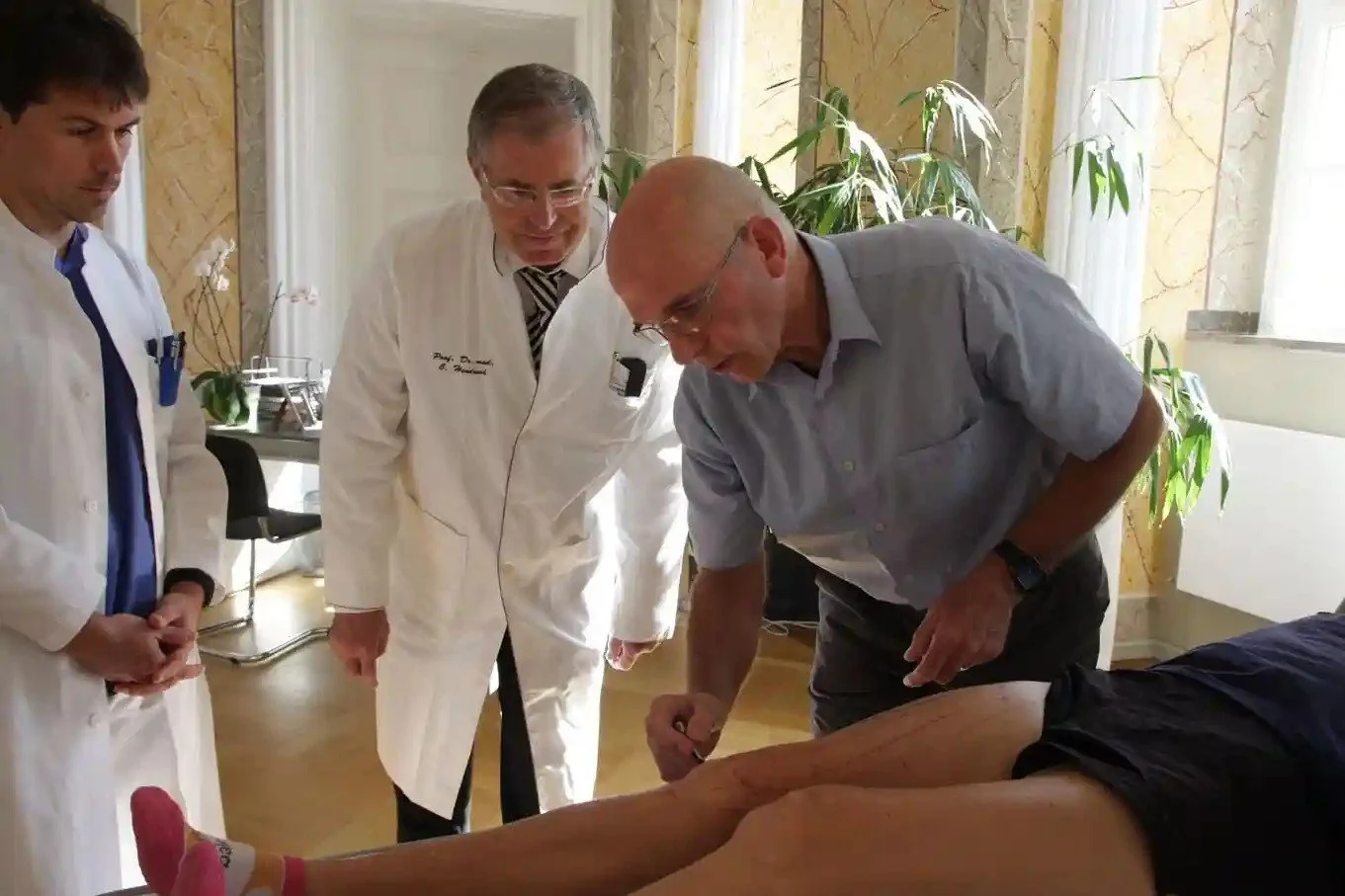
At Learn Neural Therapy, training is structured into progressive levels so you build real competency.
Level 1: Beginning Neural Injection Therapy
The essential foundation. You'll learn core principles, patient selection, and contraindications. By the end of Level 1, beginners are typically eligible and prepared to begin treating basic cases safely in their practice.
Regional Focus: Upper vs. Lower Extremity
Upper Extremity: Focuses on tension headaches, shoulder impingement, and neck pain.
Lower Extremity: Targets hips, gluteals, and pelvic pain; essential for the most common patient presentations.
Level 2: Advanced Clinical Applications
This covers high-impact ganglion injections (like the stellate ganglion) and complex autonomic function cases for seasoned providers.
Hands-On vs. Online: Which Format Is Right for You?
Choosing the right medium is essential for your clinical confidence.
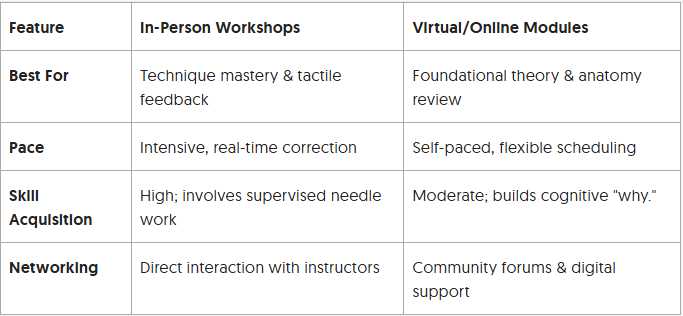
Professional Recommendation: Use virtual learning to master the theory, then attend an in-person intensive to lock in your physical technique.
Career Outcomes: Scaling Your Practice
Adding PIT to your toolkit isn't just about better patient outcomes; it's about professional sustainability.
Niche Authority: Become the go-to provider in your region for "unsolvable" chronic nerve pain.
Practice Revenue: PIT offers a low-overhead, high-value service that can be integrated into cash-pay or insurance-based models.
Reduced Burnout: Having a tool that actually works on stubborn cases increases job satisfaction and reduces the frustration of "managing" rather than "fixing" pain.
Why Learn Neural Therapy Is the Right Starting Point
There are a handful of programs offering neural therapy training and PIT injection training across the USA. What distinguishes Learn Neural Therapy is the combination of clinical depth, instructor expertise, and a curriculum designed specifically for working healthcare providers.
Our curriculum is rigorously vetted and officially accredited. We provide 15 total NANCEAC CEUs nationally for Naturopathic Physicians, NMDs, and NDs (including 2.5 pain and 1.5 pharmacy credits), as well as 15 NCCAOM PDA Points for Acupuncturists (AOM-VIO).
You can choose in-person or virtual classes, and there are different levels so you can build your skills step by step. This professional ecosystem is designed to grow with your clinical practice. Don't wait; secure your spot today.
Check the website for course dates and details.Your patients are already waiting.
FAQs
How many PIT sessions are typically required?
Most patients require a series of 4-8 sessions, spaced 1–2 weeks apart. While some experience immediate relief after the first session (the "Lyftogt Effect"), cumulative treatments are necessary to resolve chronic nerve sensitization and promote long-term tissue healing fully.
Does insurance cover PIT?
Coverage remains variable. While some private PPO plans and HSA/FSA accounts reimburse for PIT under specific pain management codes, many providers offer it as a cash-pay service. Its low overhead makes it an affordable entry point for patients compared to more expensive biologics like PRP.
Is PIT training eligible for CME credits?
Yes. Leading programs in 2026, such as those from Learn Neural Therapy, offer courses accredited for AMA PRA Category 1 Credits™. This allows MDs, DOs, and NPs to fulfill their annual licensing requirements while learning a new procedural skill.
How long do the results of PIT last?
Unlike steroid shots, which wear off, PIT aims for permanent resolution. By restoring healthy nerve function and reducing the production of pro-pain substances (such as Substance P), many patients remain pain-free for years, unless a new injury occurs.