
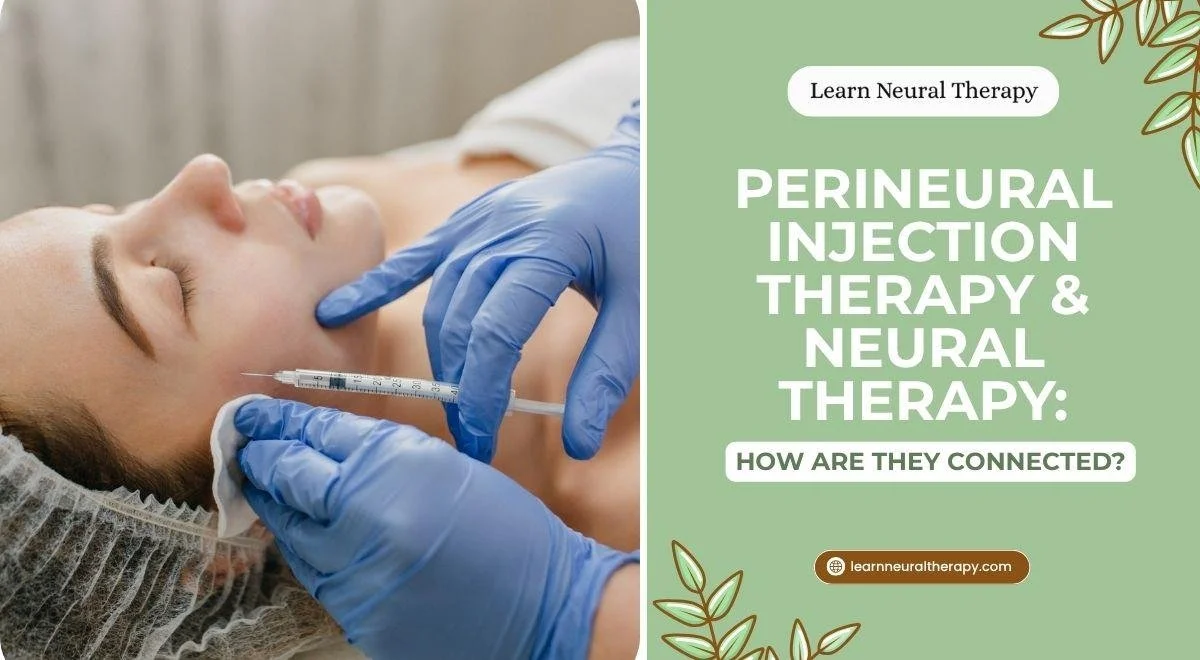
Pain has a funny way of showing up where you least expect it. A patient walks in with knee pain that started years after a car accident. Another one has stomach issues that no gastroenterologist can explain. What if the answer isn't in the joint or the gut at all, but in the nervous system?
That's the question that led many providers to Neural Therapy and its close cousin, Perineural Injection Therapy. If you've heard both terms tossed around and wondered how they fit together, you're in the right place. At Learn Neural Therapy, this exact connection is what we teach providers every single day.
Understanding Neural Therapy
Neural Therapy is a treatment that uses small injections, usually of procaine (a local anesthetic also known as novocaine), to calm down parts of the nervous system that aren't working right. These injections go into scars, nerves, or clusters of nerve tissue called ganglions.
The idea is simple: when nerve cells get damaged from surgery, injury, or old scars, they send out confused signals. Those signals can travel far from the original injury, which is why someone might feel pain in a spot that has nothing to do with where the damage happened.
The Core Principle Behind Neural Therapy
Every nerve cell has an electrical charge. When that charge gets thrown off balance, the nerve starts misfiring. Neural Therapy injections work to reset that balance so the nerve can go back to sending normal signals. It's a bit like rebooting a glitchy computer. The reset doesn't just mask pain; it gives the body a real chance to heal itself.
Conditions Neural Therapy Commonly Addresses
Providers use Neural Therapy for a wide range of issues, including:
Chronic pain that hasn't responded to other treatments.
Digestive problems like IBS and SIBO.
Fibromyalgia and chronic fatigue.
Migraines and tension headaches.
Old surgical scars that still cause trouble.
Hormonal and thyroid imbalances.
Because the autonomic nervous system controls so many body functions, one injection technique can help with symptoms that seem completely unrelated at first glance.
Understanding Perineural Injection Therapy (PIT)
Perineural Injection Therapy, shortened to PIT, zooms in on one specific job: calming down irritated peripheral nerves right under the skin. Instead of treating the whole autonomic nervous system, PIT focuses on the nerves that sit close to the surface and get inflamed from repetitive strain, old injuries, or nerve entrapment.
During a neural therapy injection session that uses the PIT method, a provider injects a small amount of dextrose (sugar water) or a dextrose-procaine mix just under the skin, right along the path of the irritated nerve. Patients notice pain relief within minutes, sometimes before they even leave the clinic.
How PIT Targets Peripheral Nerves?
Peripheral nerves are like the wiring under your skin. When they get inflamed, that wiring becomes oversensitive and starts sending pain signals even when there's no ongoing damage. A perineural injection reduces that inflammation directly at the nerve, which quiets the pain signal fast. This is one reason PIT has become such a popular tool for pain specialists and sports medicine providers alike.
Conditions Commonly Treated with Perineural Injections
PIT is used for:
Chronic joint pain, especially in knees, shoulders, and hips.
Nerve pain after surgery.
Sports injuries and overuse injuries.
Numbness or tingling from nerve irritation.
Pain that lingers after an old injury has technically "healed".
Perineural Injection Therapy vs. Neural Therapy: What's the Real Connection?
Here's where a lot of people get confused, so let's clear it up with a simple comparison.
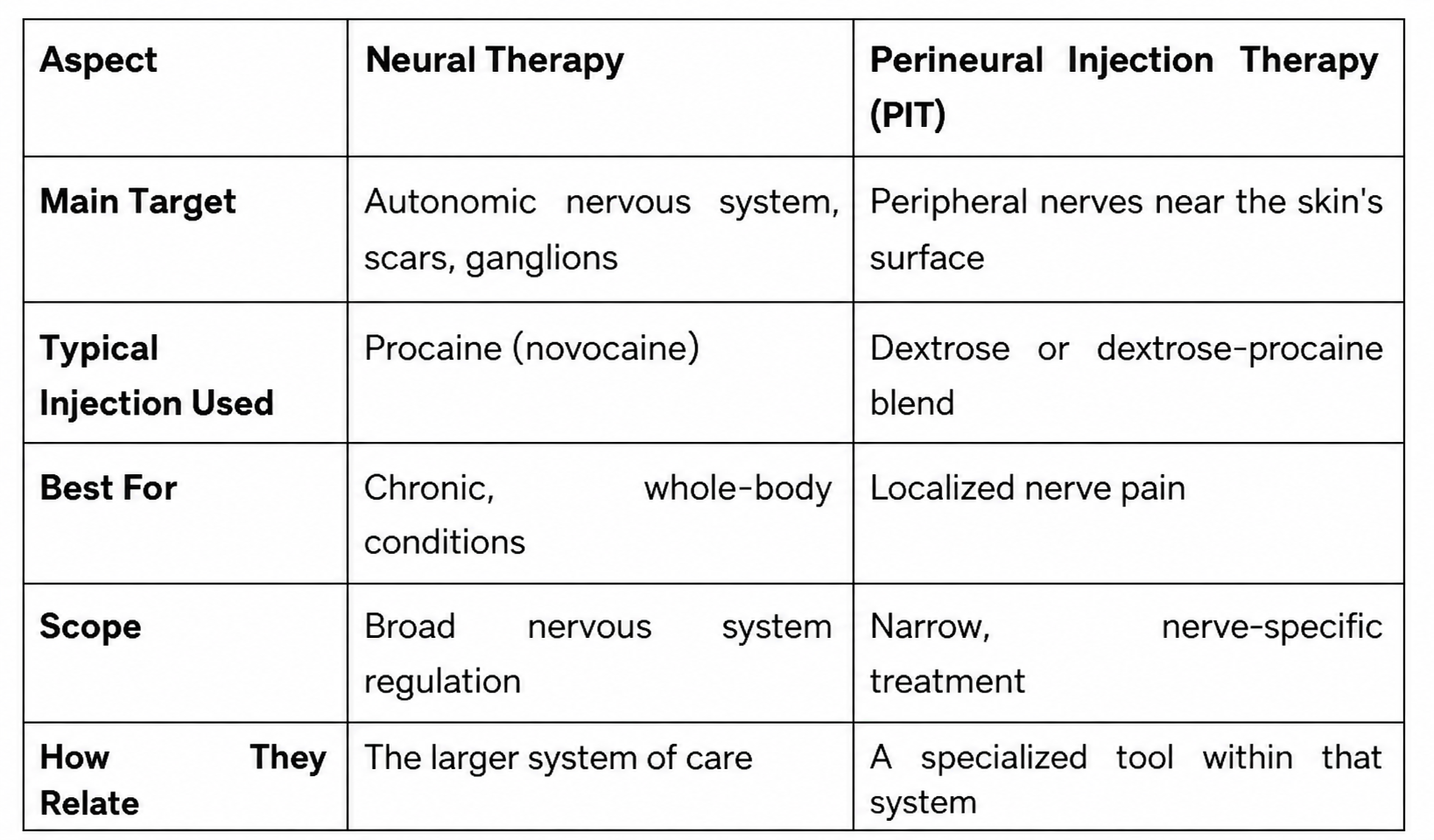
Think of Neural Therapy as the big umbrella and Perineural Injection Therapy as one of the most useful tools under that umbrella. PIT didn't come from nowhere. It grew out of the same core idea that damaged nerves send bad signals, and that a small, well-placed injection can fix that signal. The two techniques share the same foundation but apply it in different ways.
Why PIT Is Considered Part of the Neural Therapy Family
Both approaches rest on one shared belief: nerves that have been through trauma lose their normal electrical balance, and injections can restore that balance. Neural Therapy looks at the nervous system as a whole. PIT injection therapy narrows the focus to specific peripheral nerves that are causing localized pain. A provider trained in both can move between the two approaches depending on what a patient needs that day.
How the Two Techniques Work Together in Real Practice
Many providers don't pick just one. A patient with fibromyalgia and a stubborn knee injury might get broader neural therapy injections for the fibromyalgia and targeted perineural injection therapy for the knee, all in the same visit. This flexibility is exactly why so many clinicians want to learn both skill sets instead of just one.
The Science Behind Neural Therapy Injection & PIT
Nerve cells rest at an electrical charge of about 70 mV. When a nerve fires normally, that charge drops and then bounces back. But damaged nerves sit at a lower resting charge, around 45 to 50 mV, which makes them fire too easily or send confusing signals. A neural therapy injection helps push that resting charge back toward normal. Once the charge is stable, the nerve stops misfiring, pain drops, and the tissue around it gets a real chance to heal.
This is the same reason perineural injection therapy works so quickly. Dextrose solutions calm the irritated nerve endings almost immediately, which is why patients feel relief before they even stand up from the treatment table.
Benefits of Learning Both Neural Therapy & Perineural Injection Techniques
Providers who add these tools to their practice see:
Fewer patients relying on long-term pain medication.
A treatment option that's minimally invasive.
Tools that work across many specialties, from chiropractic to naturopathic medicine.
Long-term nerve healing instead of short-term masking.
A wider scope of practice and more patients they can help.
Who Can Learn These Techniques?
You don't need to already be a pain specialist to add these skills to your practice. Providers who commonly train in Neural Therapy and PIT injection therapy include:
Naturopathic doctors
Nurse practitioners
Osteopathic doctors
Chiropractors
Medical doctors
Doctors of Oriental medicine
Dentists
Acupuncturists
Any other provider with injection scope of practice
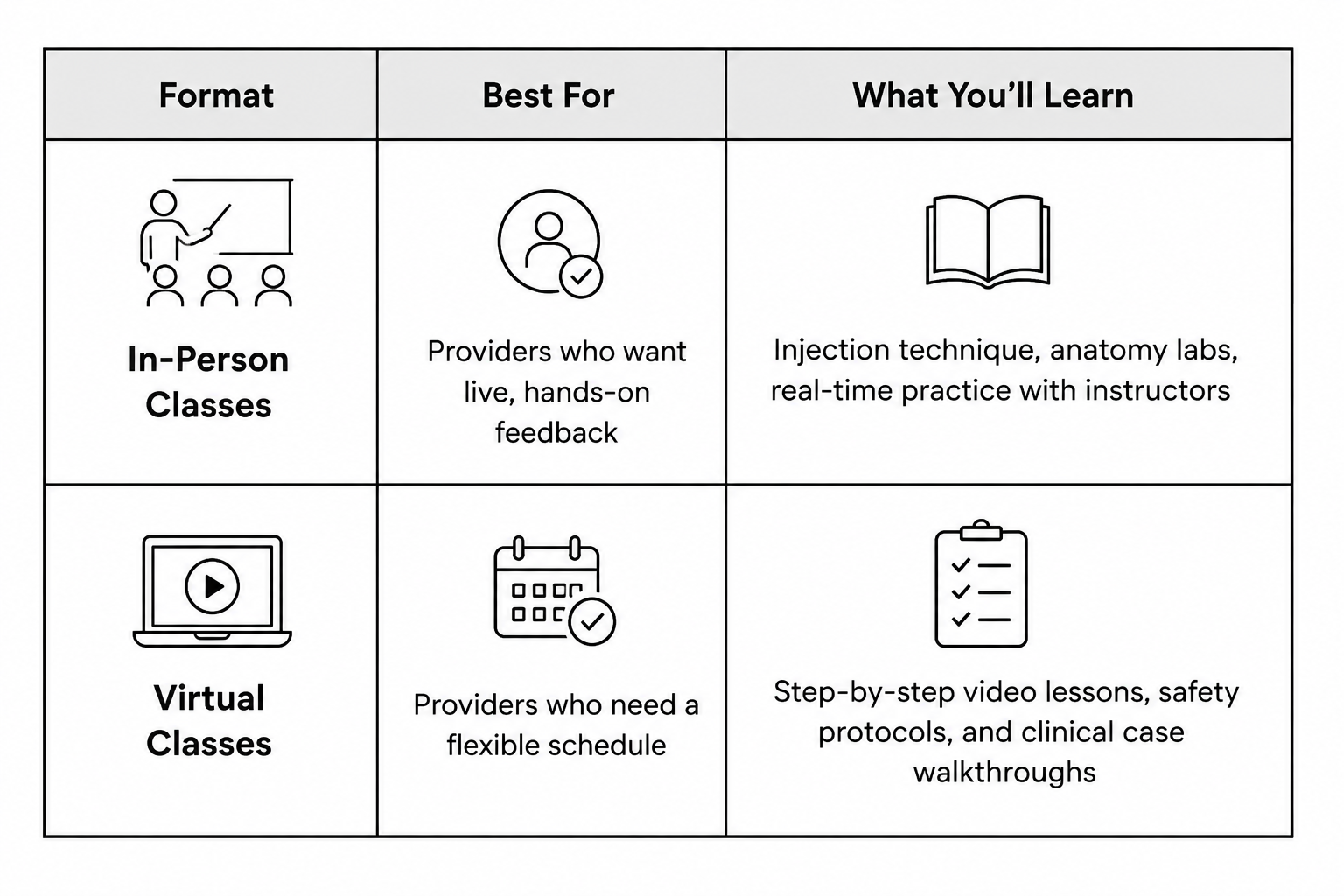
In-Person vs. Virtual Training
Why Train With Learn Neural Therapy
At Learn Neural Therapy, the courses are led by Dr. Anne Hill, ND, and Dr. Ilana Gurevich, ND, LAc, two providers who use these injection techniques with patients every week. Their classes cover more than just needle placement. You'll learn the history behind the technique, the anatomy you need to know, how procaine affects the body, and even the practical stuff like consent forms and billing. Whether you're brand new to injection therapy or already comfortable with a needle, Learn Neural Therapy has a class built for where you are right now.
Ready to Bring These Techniques Into Your Practice?
Neural Therapy and Perineural Injection Therapy aren't competing treatments. They're two sides of the same coin, built on the same idea that a calmer, better-balanced nervous system leads to real healing. If you're a provider who wants to offer patients something that actually gets to the root of chronic pain, this is the skill set worth having.
Learn Neural Therapy has trained providers from all kinds of backgrounds, and there's a class ready for wherever you're starting from. Take a look at the current class schedule and see which format fits your practice best, or reach out to the Learn Neural Therapy team with any questions before you sign up.
FAQs
Is Perineural Injection Therapy the same as Neural Therapy?
Not exactly. PIT is a focused technique that lives inside the larger world of Neural Therapy. Neural Therapy treats the whole autonomic nervous system, while PIT zeroes in on peripheral nerves.
What injectate is used in PIT injection therapy?
Most providers use a dextrose solution, sometimes mixed with a small amount of procaine.
Do I need injection experience before taking a course?
No. Beginner-friendly classes start with the basics and build from there.
How fast do perineural injections work?
Many patients feel relief within minutes, though full results usually build over a few sessions.
Can these courses be taken online?
Yes. Learn Neural Therapy offers both in-person and virtual classes, so you can pick what fits your schedule.