
Neural Therapy Explained: What It Is, How It Works, Conditions It Treats & Its Benefits

You have probably tried a lot of things for your pain. Medications. Physical therapy. Steroid injections. Maybe even surgery consultations. And yet here you are, searching for something that actually works.
Now, if that sounds familiar, there is something important you need to know about.
It is called Neural Therapy and it works in a way that is completely different from anything you have probably tried before. It does not mask pain. It does not suppress inflammation temporarily. It goes deeper than that; directly to the root of why your nervous system keeps firing pain signals in the first place.
This guide will walk you through everything you need to know.
What Is Neural Therapy?
Neural Therapy is a specialized injection technique that targets the autonomic nervous system, the part of your body responsible for involuntary functions like pain signaling, circulation, digestion, and organ function.
Neural Therapy uses small injections of a low-dose local anesthetic called procaine. This treatment resets the electrical activity of damaged or overactive nerve cells, helping return them to their normal, healthy state.
Most pain treatments ask, "Where does it hurt?"
Neural Therapy asks: Why does your nervous system keep hurting?
That shift in perspective is what makes Neural Therapy so different and so effective for patients who have failed every other treatment.
It was first developed in Germany in the early 20th century by the Huneke brothers, two physicians who noticed that injecting local anesthetic into old scars and injury sites produced dramatic, immediate relief in distant parts of the body. Their discovery laid the foundation for what we now call Neural Therapy.
This practice is common in Europe and South America and is quickly being recognized in the United States as a solution for tough, long-lasting pain that doesn't respond to other treatments.
How Is Neural Therapy Different From Other Injections?
This is a question many patients and practitioners ask, and it is a great one.
Here is a simple comparison:
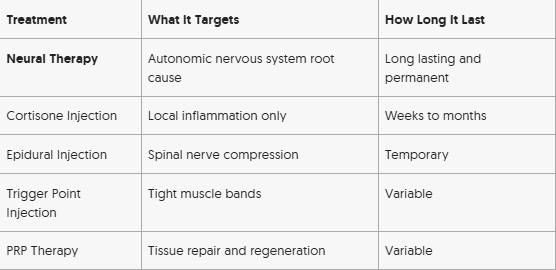
Neural Therapy is the only technique on this list that targets the electrical root cause of chronic pain. That is the gap it fills and why it succeeds where everything else has fallen short.
How Does Neural Therapy Work?
This is where things get a little technical, but it's not as complicated as it sounds.
Every nerve cell in your body has something called a resting membrane potential. Think of it like a battery sitting at a certain charge level when it's not being used. In a healthy nerve, that charge sits around 70 millivolts. When something happens that needs the nerve to "fire," like touching something hot, the charge drops and triggers a signal.
But when a nerve gets damaged, say, from a surgical scar or an old sports injury, its resting charge can drop permanently, sometimes down to 45 or 50 millivolts. A nerve sitting at that lower charge is basically stuck in an "on" position. It keeps firing signals it shouldn't, and those signals can show up as pain, fatigue, digestive trouble, or other symptoms that seem to have no clear cause.
This is exactly what neural injection therapy is built to fix. A trained provider injects a small dose of anesthetic directly near the damaged nerve. That injection helps reset the cell's electrical charge back toward normal, which can stop the faulty signaling and let the body start healing the area properly.
What is Perineural Injection Therapy?
Perineural Injection Therapy (PIT) is a technique that injects glucose (sugar water) around peripheral nerves just under the skin. It targets small nerves affected by pinching, irritation, or inflammation from repetitive movements or injuries.
Perineural injection therapy zeroes in on those surface-level nerves causing localized pain. Both techniques fall under the same broad philosophy: treat the nerve, not just the symptom.
How Does This Connect to Your Whole Body?
Here's something a lot of people don't realize. Your autonomic nervous system controls way more than pain. It manages blood flow, digestion, lymph drainage, and even hormone regulation.
When nerve dysfunction throws this system off balance, the ripple effects can touch almost any part of your health. That's why neural therapy treatment sometimes helps with issues that don't seem connected to nerves at all, like chronic sinus problems or digestive flare-ups.
A Quick Note on Neural Reset Therapy
You might also come across the term Neural Reset Therapy while researching this topic. It's a separate, non-invasive technique that uses light touch on specific points to calm an overactive nervous system, rather than injections. It's not the same thing as neural therapy or perineural injection therapy, but it shares the same basic goal: helping the nervous system stop overreacting and start healing.
What Conditions Does Neural Therapy Treat?
This is usually the first question people ask, and honestly, the list is longer than most expect.
Chronic Pain & Joint Problems
Back pain, arthritis, fibromyalgia, and general muscle pain are some of the most common reasons people seek out neural therapy treatment. More than 60 million Americans (24.3% of the population) live with chronic pain, according to 2024 CDC data cited by Forbes.
Instead of relying on long-term medication or surgery, this approach tries to calm the nerve signals causing the pain in the first place.
Nerve-Related Issues
Nerve pain, also called neuralgia, along with numbness and tingling, responds well to this kind of treatment. Scar tissue from old surgeries can also trap nerves and cause pain in places that seem totally unrelated to the original scar, which is part of what makes neural therapy so interesting to begin with.
Whole-Body & Organ-Related Conditions
The autonomic nervous system touches nearly every organ. Neural therapy is sometimes used for headaches, brain fog, and high blood pressure. Moreover, digestive disorders like IBS, SIBO, and inflammatory bowel disease can also be cured. It's also used to support lymphatic drainage, which can help with chronic sinus congestion and ongoing inflammation.
Other Conditions Worth Mentioning
Some providers also use neural therapy for skin issues like acne, hormonal imbalances, thyroid trouble, allergies, asthma, and even fatigue that doesn't have a clear medical explanation. It's important to say that research on these uses is still developing, and results can vary from person to person. If you're dealing with any of these conditions, talk to a qualified provider about whether it's a fit for you.
Headaches & Migraines
Sports Injuries
Nerve Entrapment
What Happens During a Neural Therapy Session?
First, the provider talks with you about your health history, including old injuries, surgeries, and scars. This step matters a lot because old scars are the hidden cause of pain showing up somewhere else.
Next, they'll identify the specific areas, sometimes called interference fields, that seem to be disrupting your nervous system.
Then comes the injection itself. Using a very fine needle, the provider delivers small amounts of anesthetic into the targeted spots. Most people describe it as a quick pinch, nothing dramatic. The whole appointment usually wraps up in under thirty minutes.
One session can bring noticeable relief, but most people need several sessions spread out over a few weeks to get the full benefit. Chronic, long-standing issues usually take more time to resolve than recent injuries.
Benefits of Neural Therapy
For patients choosing Neural Therapy, the benefits are clear and consistent:
Fast, Lasting Relief" in the first session. This is overstated. Some patients do report rapid response, but results vary significantly. Presenting it as "clear and consistent" is misleading.
Targets the root cause — This is a contested claim. Neural therapy's mechanism (interference field theory) is not well-established in mainstream evidence-based medicine. Saying it addresses the "root cause" is not scientifically verified.
No risk of dependency — Technically true (procaine/lidocaine aren't addictive), but implying zero risk is an overstatement. There are still risks like allergic reactions, infection, or incorrect injection placement.
Effective even for conditions that haven't responded to other therapies" — This is a strong marketing claim without solid clinical trial evidence to back it up broadly.
Benefits are clear and consistent - Neural therapy has limited high-quality clinical trials supporting it. This framing is misleading from an evidence standpoint.
Finding Qualified Neural Therapy Practitioners
Here's the part that matters most: this treatment works best when the person giving it is skilled. Neural therapy practitioners need real hands-on training, not just a quick read-through of how injections work. The nervous system is sensitive, and proper technique makes a real difference in both safety and results.
Check their background when looking for a provider. Naturopathic doctors, medical doctors, osteopathic doctors, chiropractors, and acupuncturists can all practice neural therapy after they receive special training. This training covers injection techniques, anatomy, and safety protocols. This is exactly the kind of training Learn Neural Therapy provides to healthcare providers who want to bring this treatment into their own practices.
Ready to Learn More?
Neural therapy isn't a magic fix, but for people stuck dealing with pain that nothing else has solved, it's worth a real look. By calming the nerves behind chronic symptoms instead of just covering them up, this treatment comes up as a different path toward lasting relief.
If you're a patient curious about trying it, start by finding a trained provider near you. And if you're a healthcare provider who wants to add this skill to your practice, Learn Neural Therapy offers hands-on training designed to get you confident and ready to treat real patients.
Explore the classes available through Learn Neural Therapy today, and take the next step toward bringing this powerful tool into your work.
FAQs
Is neural therapy painful?
Not really. Most patients say it feels like a quick pinch, similar to a routine shot.
How many sessions will I need?
It depends on your condition. Some people feel better after one or two visits, while chronic issues need several sessions spread over weeks.
Is neural therapy the same thing as perineural injection therapy?
Not exactly. Perineural injection therapy is one specific technique within the broader practice of neural therapy, focused on nerves just under the skin.
Is there research behind neural therapy?
There's a growing body of clinical evidence and provider experience supporting it, though large-scale studies are still catching up. It's worth discussing the current research with your provider before starting treatment.