
Neural Injection Therapy Courses: How to Choose the Right Course in 2027?

You have a patient with back pain who has tried everything. Pills helped a little. Physical therapy helped for a week. So you start to wonder if there is one more tool you could add to your clinic.
Many providers land in this exact spot. Usually, it leads them to neural injection therapy courses. Then comes the next problem. The class names sound alike, and some are online while others are hands-on. Some teach procaine and others teach dextrose. This guide sorts it all out in plain words, so you can pick with confidence. We will also show where Learn Neural Therapy fits in.
What Do Neural Injection Therapy Courses Teach?
Most classes fall into two groups.
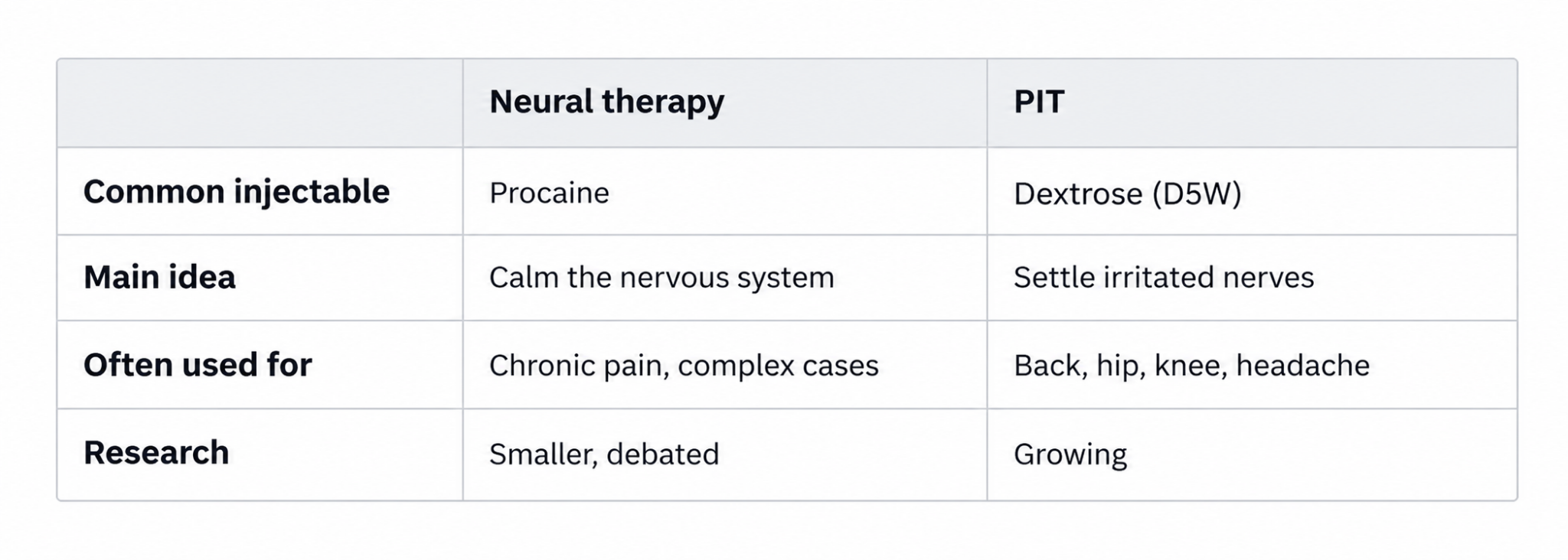
Neural therapy injection (procaine-based)
A neural therapy injection uses a numbing medicine, usually procaine. Providers place it near nerves, scars, or ganglia, which are small clusters of nerve cells. The theory says hidden "interference fields" in the body can disturb nerve control, and injections may calm them. The method began in Germany in the 1920s.
Perineural injection therapy (PIT)
Perineural injection therapy uses dextrose, which is simple sugar water. Small shots go just under the skin, close to sensitive nerves. Dr. John Lyftogt of New Zealand pioneered the technique. It used to be called neural prolotherapy. Each perineural injection is shallow, so classes teach it one body region at a time.
Who Can Take These Courses?
Not everyone can inject, and rules change by state and country. Learn Neural Therapy designs its classes for MDs, DOs, NDs, dentists, nurse practitioners, chiropractors, acupuncturists, and other providers who have an injection scope of practice.
Before you pay for anything, call your licensing board and ask what your license allows. It takes ten minutes and can save you real trouble.
Neural Therapy Training Levels Explained
Think of the levels like school grades. You start with the basics and move up.
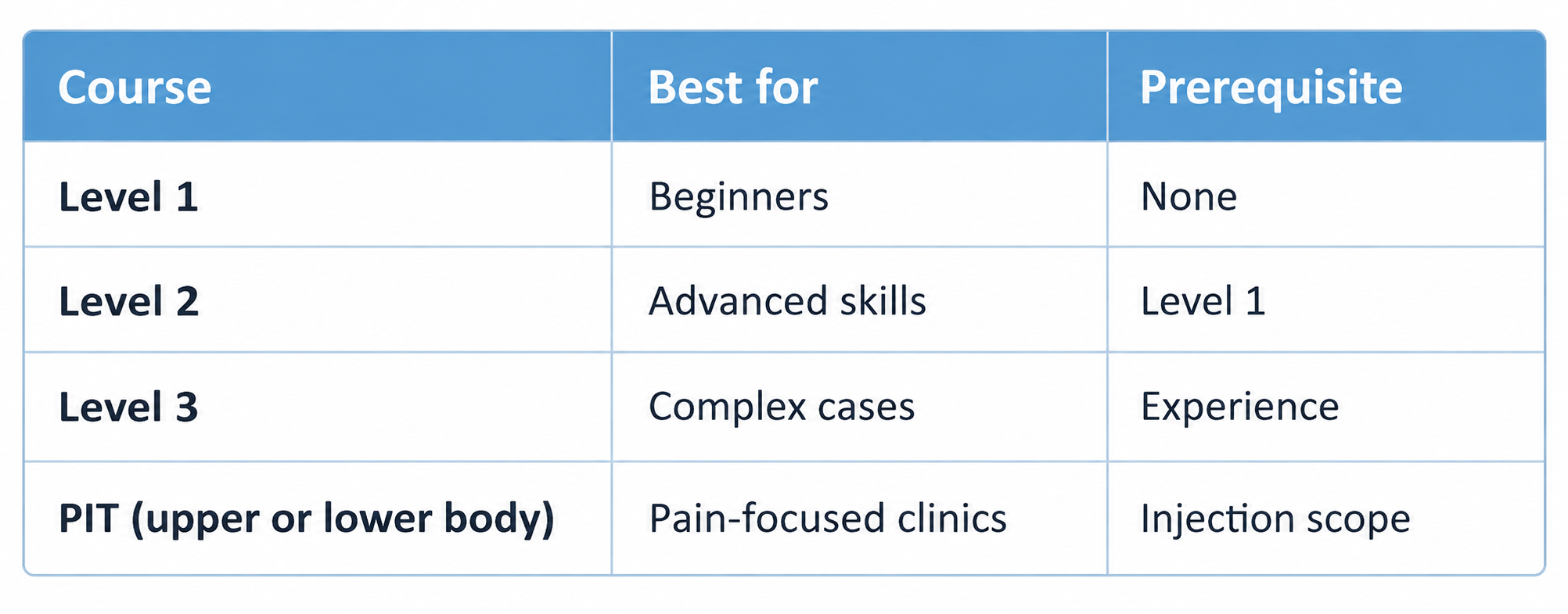
Level 1 is the beginner class. NAANT lists it at 15 CEUs and $1,100. Prices change, so check the live page for 2027.
Level 2 is for people who finished Level 1. Students practice injections for the sinuses, thyroid, stellate ganglion, and deep pelvic areas. They also study safety and office emergencies.
Level 3 is for experienced providers. It covers advanced specialty injections for complex care.
PIT classes are split by area. One covers the head, neck, face, and upper body. Another covers the low back, hips, and pelvis.
How to Pick the Right Neural Injection Therapy Course
Use these five questions.
Who are your patients? If most of them have joint or back pain, a PIT class may fit. If you see long-term, complicated cases, start with neural therapy training.
Who is teaching? Look for teachers who treat patients every week. They know what works in a real clinic.
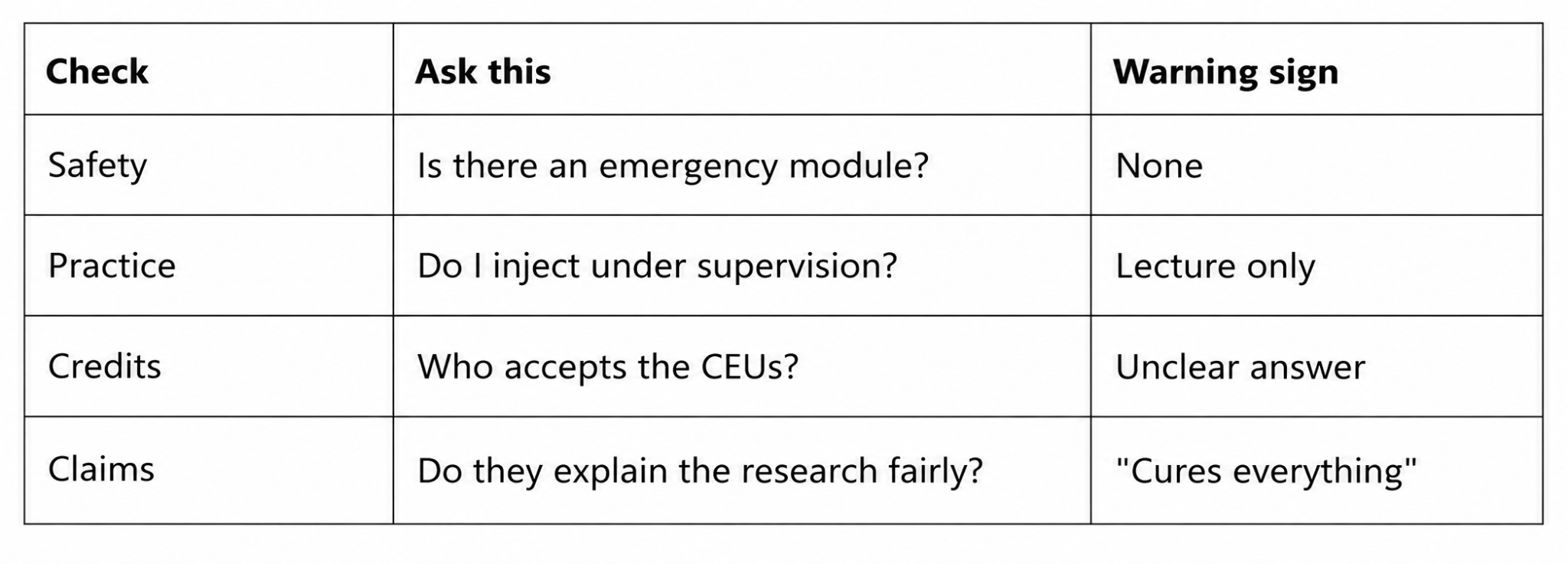
How much is hands-on? Reading about a needle is not the same as using one. Some workshops count toward certification through 18 hours of hands-on practice. Ask each school how much practice time you get.
Do the credits count? Ask which boards accept the CEUs. A vague "certificate" tells you little.
What happens after class? Good schools give you notes and reference guides to use later. One attendee praised the instructors and the reference material at Learn Neural Therapy.
In-Person or Virtual?
In-person classes are best for feel. You learn where to press, how the skin moves, and how to hold the syringe. A teacher can fix your grip on the spot.
Virtual classes are great for theory, anatomy, and busy schedules. Learn Neural Therapy offers online classes you can take from your own workspace. Many people mix both. They start online, then add a live workshop later.
Is It Backed by Research?
Be careful here. The two methods do not have the same amount of proof.
PIT has more studies behind it. One review of 13 studies with 754 patients found dextrose eased short-term pain better than saline and better than corticosteroids for nerve compression in the arm. Still, it is not for every case. Patients with severe carpal tunnel and muscle wasting are usually sent for surgery.
Procaine-based work has less research, and some critics doubt it. A good course will say this openly and teach you when to refer a patient out.
Why Choose Learn Neural Therapy in 2027?
Learn Neural Therapy covers both paths in one place. You can begin with Level 1, move on to advanced classes, or go straight to regional PIT training. There are two experienced teachers, Dr. Anne Hill and Dr. Ilana Gurevich, and both use these methods in daily practice. There is also a YouTube channel and a podcast, so you can hear how they teach before you sign up.
Ready to Take the Next Step?
Choosing among neural injection therapy courses gets easier when you know your patients, your license, and your goals. Match those to the right level, check the hands-on time, and ask honest questions about the research.
When you are ready, visit Learn Neural Therapy, browse the 2027 classes, and pick the one that fits your clinic. Reserve your seat today!
FAQs
What is the best neural injection therapy course for beginners?
Level 1 is the usual start. It covers the basics and does not require earlier neural therapy classes.
How long does neural therapy training take?
Many classes run one to three days. Full skill grows with practice after class.
How is perineural injection therapy different from neural therapy?
Neural therapy usually uses procaine. Perineural injection therapy uses dextrose near skin-level nerves.
Do I need injection experience?
You need an injection scope of practice. Level 1 is built for people who are new to this work.
Can nurse practitioners or chiropractors join?
Often yes, if their license allows injections. Check with your board first.
Are there online options and CEUs?
Yes to both. Virtual classes exist, and Level 1 lists 15 CE