
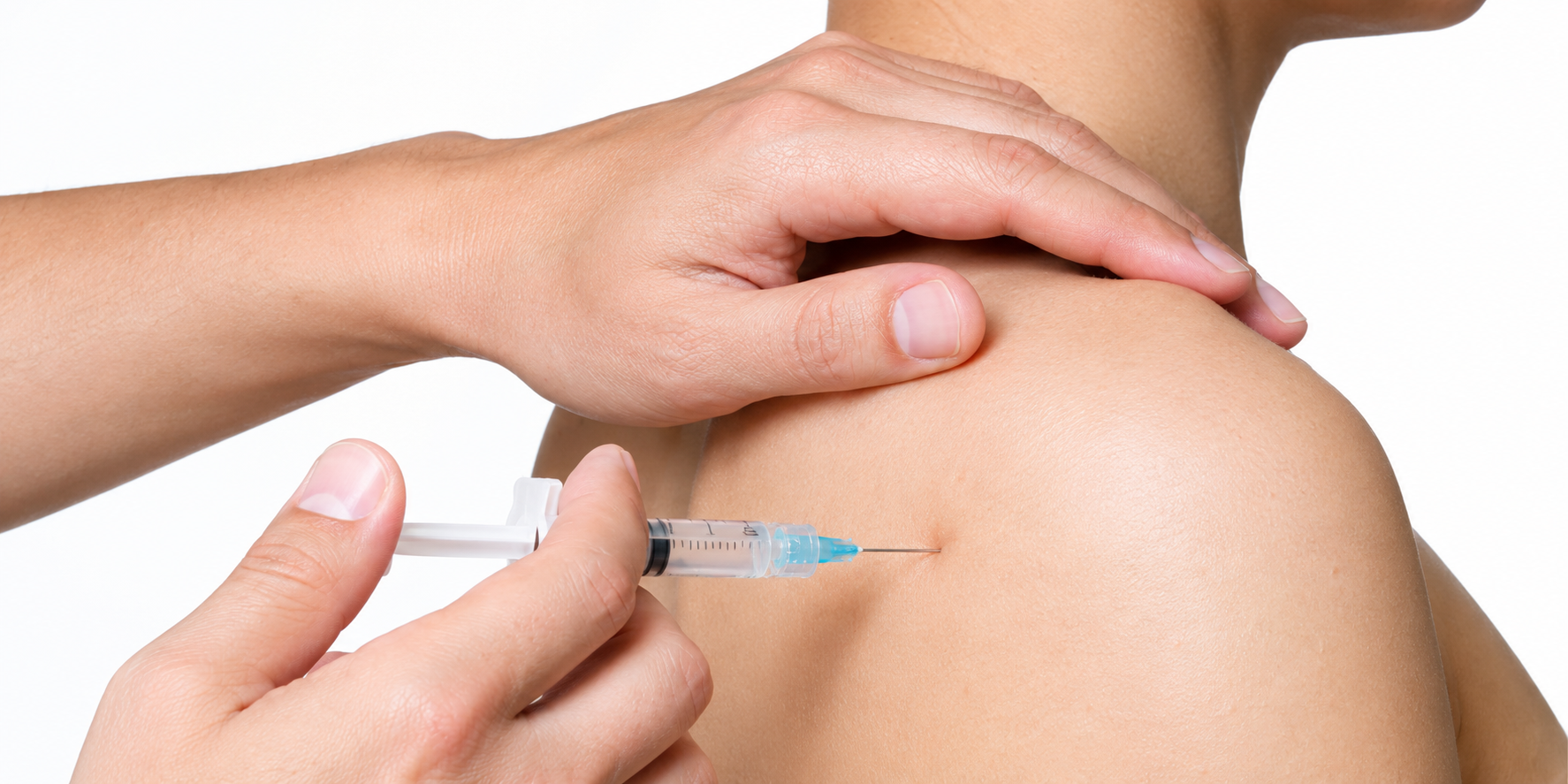
Picture a scar from an operation you had years ago. It healed long ago, but your shoulder still aches, and your scans look normal. Doctors shrug. You keep hurting.
Stories like this are why many people in the USA are looking at Perineural Injection Therapy & Neural Therapy. Both use tiny injections near nerves, and for some patients they may ease pain and even help delay or avoid surgery. This guide covers how each one works, what a visit feels like, what research says so far, and how to find trained help. It comes from the team at Learn Neural Therapy, which teaches these skills to licensed healthcare providers.
What is Neural Therapy & Perineural Injection Therapy?
Both perineural injection therapy and neural therapy use very thin needles and small amounts of liquid. The goal is to calm nerves that seem stuck in “pain mode.”
Neural Therapy Injections
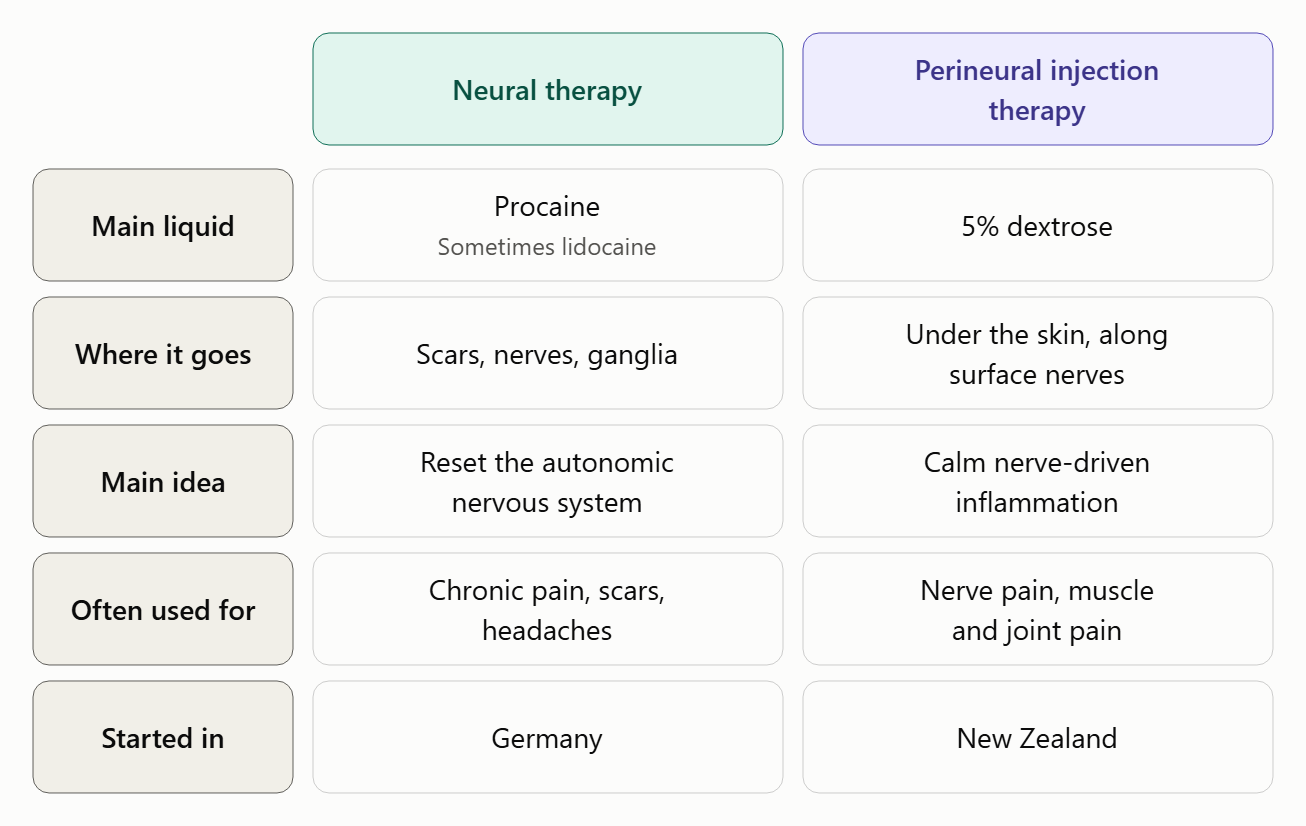
Neural therapy began in Germany. In 1925, Dr. Ferdinand Huneke gave his nurse a procaine shot for her rheumatism. Her migraines, which nothing else had helped, went away. His brother Walter spent his career studying why.
Today, neural therapy injections use procaine, a numbing medicine close to the kind dentists use. The provider places it in scars, nerves, and groups of nerve cells called ganglia. The idea is that injured tissue can send mixed-up messages through the autonomic nervous system, which runs things like heartbeat and digestion. Procaine is meant to settle those messages down.
Perineural Injection Therapy
PIT was developed by New Zealand doctor John Lyftogt. “Perineural” simply means “around a nerve.” Instead of a numbing drug, the provider uses a mild sugar-water mix called 5% dextrose. It goes just under the skin along sore nerve paths. Researchers think it calms nerve-driven swelling, known as neurogenic inflammation. Many providers like perineural injections because the solution is gentle and simple.
Neural Therapy vs. Perineural Injections: Key Differences
The two are cousins, not twins. This table shows the main gaps.
Two other injection options are worth knowing. Prolotherapy uses stronger sugar water aimed at ligaments and tendons, and trigger point shots target tight muscle knots. A trained provider can tell you which one fits your problem.
How Do These Injections Work?
Nobody has all the answers yet. Here are the leading ideas.
The Nerve Signal Theory
Healthy nerve cells hold an electrical charge, a bit like a battery. After an injury or surgery, that charge can drop, and the nerve may send false alarms. Think of a smoke alarm that keeps beeping after the fire is out. Providers who use perineural injection therapy and neural therapy believe the shot helps reset that alarm. This is a theory, and researchers are still testing it.
Why Short-Acting Medicine May Last Longer
Procaine wears off within an hour. Yet many patients say their relief lasts days, weeks, or longer. Practitioners think the injection nudges the body out of “fight or flight” and into “rest and digest,” and that this calmer state sticks around after the drug is gone.
Conditions Commonly Treated
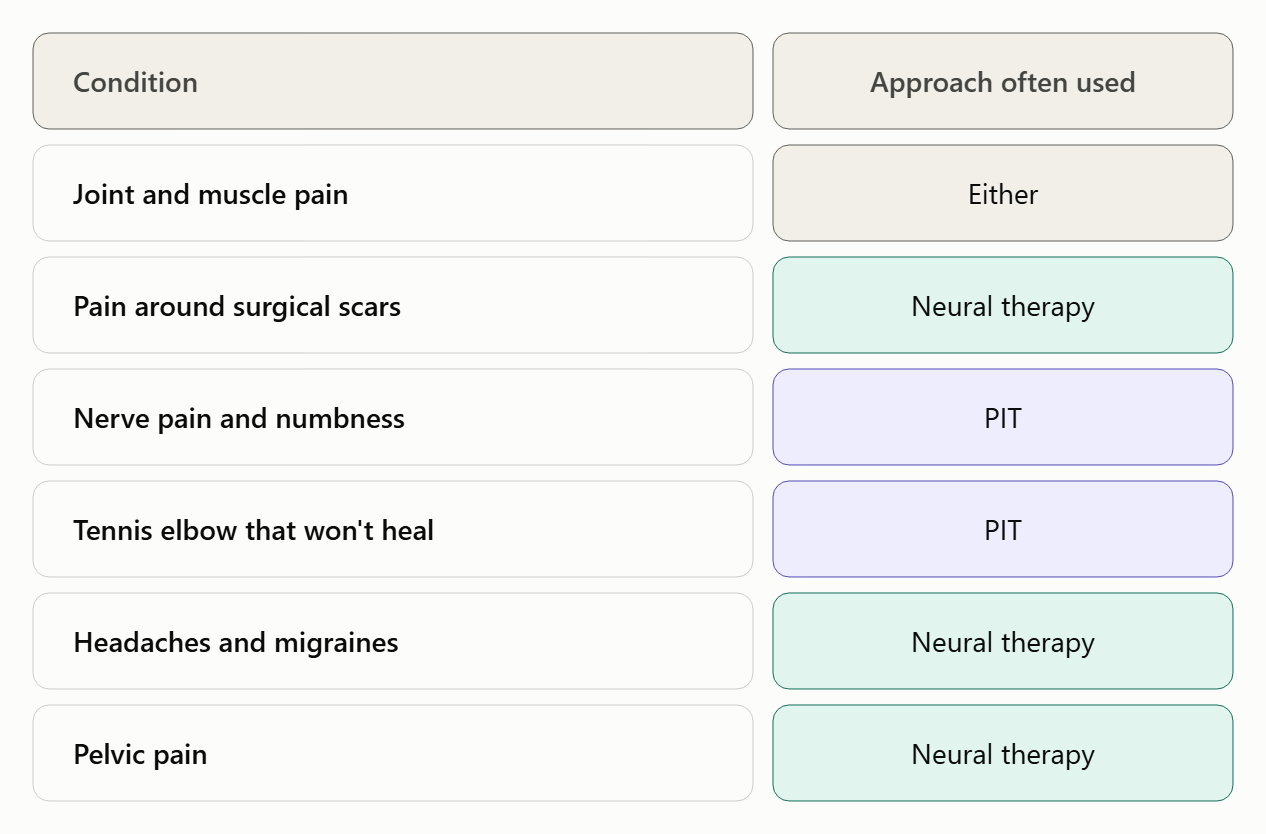
People most seek these treatments for pain that won’t quit.
Some providers also use neural therapy for stomach trouble, tiredness, and low mood. The evidence for those uses is thinner, so talk with your provider about realistic goals.
What to Expect at Your First Session
Step by Step
History. Your provider asks about your pain, surgeries, scars, and accidents.
Plan and screening. You review allergies. Some providers offer a tiny test injection first.
Injections. You get several small shots. Most sessions last 30 to 45 minutes, and you rarely need to undress.
Aftercare. You may be told to rest and drink extra water.
Does It Hurt? How Many Visits?
Most patients compare it to a mosquito bite, though scars and sensitive spots can sting more. Because procaine numbs, the area quickly feels better. Some people feel relief right away, while others need a series. One training clinic reports an average of three to six treatments, and some providers book visits every week or two at first. Your result depends on your body and how long the problem has been there.
Possible Side Effects
Common ones include small bruises, a few minutes of lightheadedness, a short flare-up the next day, and sometimes strong emotions. These usually pass fast. Tell your provider about anything that feels unusual.
Is It Safe & Does It Work?
What the Research Shows
The honest answer is promising, but still growing. A university pain clinic in Bern, Switzerland followed 280 patients with stubborn, long-term pain treated with neural therapy. The authors said it needed few visits, cost little, and caused few problems. For PIT, a study of long-lasting tennis elbow found it helpful in hard cases. A Korean look-back study compared dextrose with lidocaine for nerve pain and reported only minor bruising.
Still, most studies are small or observational. Larger, well-controlled trials are needed before anyone should call these treatments proven.
Risks and Who Should Skip It
Anyone allergic to numbing drugs such as procaine or lidocaine should not get neural therapy injections. Any needle can cause an infection, so clean technique matters. Shots near the chest carry a small risk of a collapsed lung, and injections in the neck or near ganglia take extra skill. This is why training matters so much.
FDA and Insurance
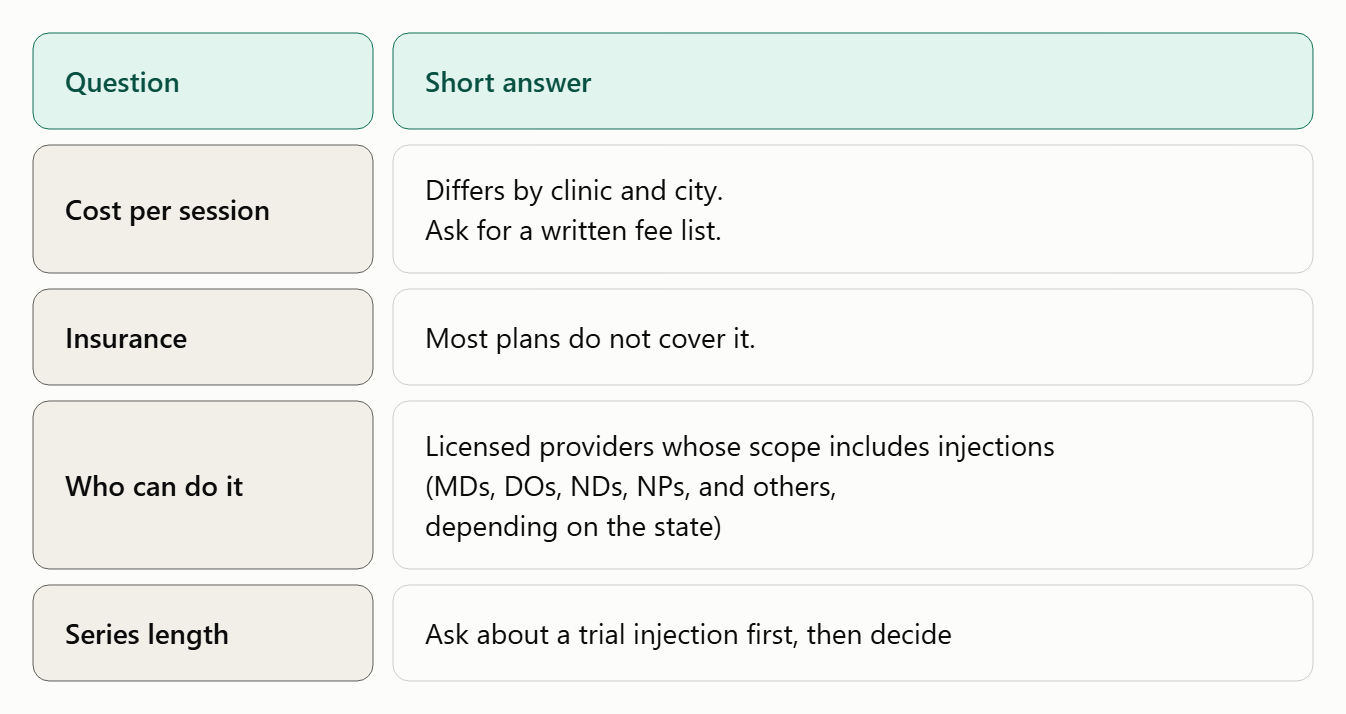
Procaine is FDA approved as an anesthetic, but not for neural therapy use. In the USA, the method is treated as experimental, and many insurers call it investigational.
Cost, Insurance & Legal Status in the USA
Costs for perineural injection therapy and neural therapy vary a lot, so ask questions early.
How to Find Qualified Neural Therapy Practitioners
Skill matters more than anything else here. Good neural therapy practitioners welcome your questions.
Questions to Ask
What training do you have in neural therapy or PIT?
How many patients have you treated?
How do you handle side effects?
What will it cost, and how many visits should I expect?
Where to Look
Learn Neural Therapy keeps a Find a Provider list. It currently covers Oregon, New Mexico, New Hampshire, Vermont, and Vancouver.
For Clinicians
If you are a licensed provider, Learn Neural Therapy offers in-person and virtual classes. Courses include Level 1, Level 2 with ganglion and specialty injections, and PIT for the upper and lower body. They are taught by Dr. Anne Hill, ND, and Dr. Ilana Gurevich, ND, LAc. You also learn consent forms and billing, so you can bring perineural injection therapy and neural therapy into your own practice.
Ready to Take the Next Step?
Perineural injection therapy and neural therapy won’t suit everyone, but they give many people with long-lasting pain a gentle option worth discussing with a trained provider. If you are a patient, start with the Find a Provider list. If you are a clinician, join the classes at Learn Neural Therapy and learn these skills from working practitioners. Visit learnneuraltherapy.com/class to view upcoming dates, or contact the team to ask a question.
FAQs
Is neural therapy the same as perineural injection therapy?
No. Neural therapy uses procaine in scars, nerves, and ganglia. PIT uses 5% dextrose near surface nerves. They share the goal of calming irritated nerves, and some providers use both.
How long does relief last?
It varies. Some people feel better right away, and others need a series. Some providers count a treatment as working if relief holds past 24 hours.
Can it replace surgery?
Not for everyone. Some patients say they avoided or delayed surgery, but problems like severe tears or broken bones may still need it. Talk with both your surgeon and your injection provider.
Is it covered by insurance?
Usually not, since most plans see it as experimental.
How do I become a practitioner?
You need a license that includes injections, plus solid training in anatomy, safety, and technique.