
Is Perineural Injection Therapy Right for You? Key Factors to Consider

You've tried the physical therapy. You've tried the pain pills, the ice packs, maybe even a cortisone shot or two. And the pain is still there, sitting in the same spot, refusing to leave. If that sounds familiar, you've probably come across the term perineural injection therapy while searching for something that actually works. But is it worth trying?
At Learn Neural Therapy, we get this question a lot, and the honest answer is: it depends on your body, your history, and a handful of factors most people never think to ask about. Chronic pain affects 24.3% of U.S. adults, while 8.5% experience high-impact chronic pain that frequently limits daily life or work activities, according to the CDC’s 2023 National Health Interview Survey. Let's walk through them!
What is Perineural Injection Therapy?
Perineural injection therapy is a treatment where a provider injects a small amount of dilute local anesthetic just under the skin, right along the path of an irritated nerve. The goal isn't to numb you. It's to calm down a nerve that's been sending out pain signals long after it should have stopped.
Here's the simple version of how it works. Nerve cells carry a small electrical charge. When a nerve gets injured or irritated, that charge gets thrown off balance, and the nerve starts firing pain signals even without a new injury happening. The anesthetic used in perineural injections helps reset that charge, so the nerve calms back down and stops screaming.
PIT is actually a branch of a bigger practice called neural therapy, which has been used for decades to treat chronic pain by targeting nerves, scars, and other tissues.
Perineural Injection Therapy vs. General Neural Therapy
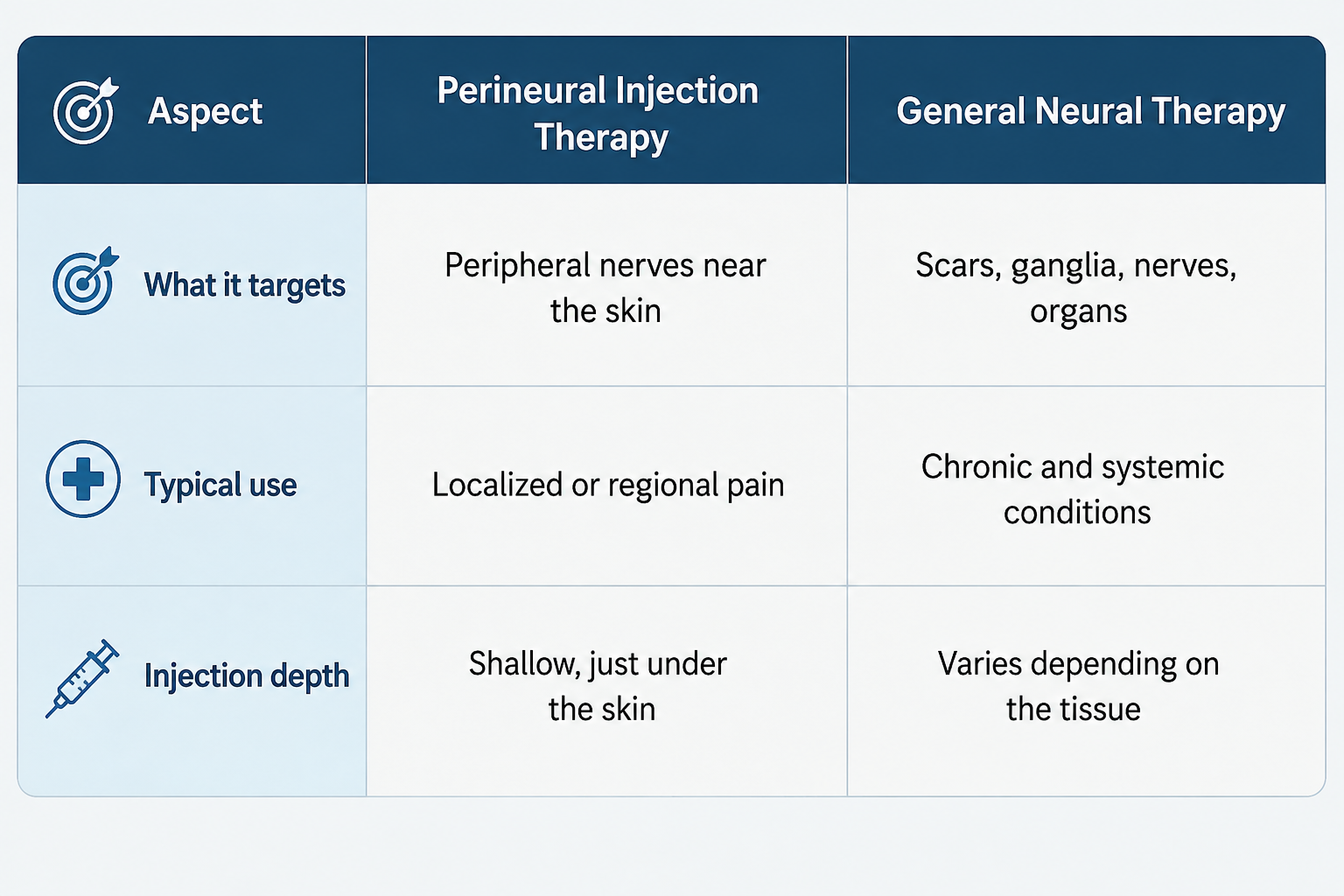
Once you know where PIT fits inside the wider world of neural therapy, the next question is simple: Does it fit you?
Who is a Good Candidate?
Everyone with pain is not a good fit for this treatment, and that's okay. Neuropathic pain is estimated to affect approximately 7%–10% of adults in the general population, according to the International Association for the Study of Pain. PIT tends to work best for people dealing with:
Chronic muscle or joint pain that hasn't improved with rest or medication.
Nerve pain, also called neuralgia, including tingling, burning, or numbness.
Pain leftover from an old surgery or injury.
Fibromyalgia-related pain that flares in specific spots.
Headaches or migraines tied to neck and scalp nerves.
People who've already tried the usual routes, like physical therapy, anti-inflammatories, or standard cortisone injections, without lasting relief end up exploring perineural injections next.
That said, this treatment isn't for everyone.
If you're pregnant, allergic to local anesthetics, dealing with an active infection near the injection site, or have a bleeding disorder, you'll want to talk it through with a provider before moving forward. A good provider will ask about your full health history first, not just look at where it hurts.
Key Factors to Consider Before Starting Treatment
This is really the heart of the decision. Before you book that first appointment, walk through these 7 things.
1. Your Diagnosis & Pain History
Is your pain new, or has it been hanging around for months or years? Perineural injection therapy tends to work best on pain that's become chronic, meaning the nerve itself has started misbehaving, not just the original injury site.
A clear diagnosis, or at least a clear description of your symptoms, helps a provider figure out if this is the right tool for your specific pain.
2. Provider Training & Experience
This one matters more than people realize. This treatment requires precision. The provider needs to know nerve anatomy well and understand exactly where and how deep to inject. Ask directly about their training. Neural therapy specialists who've completed hands-on courses, not just read about the technique, tend to get better and safer results.
3. Treatment Goals & Realistic Expectations
PIT isn't magic, and anyone who promises it'll erase your pain in one visit isn't being straight with you. Most people see gradual improvement over a series of sessions, not an instant fix. Going in with realistic expectations makes the whole experience less frustrating.
4. Number of Sessions & Time Commitment
Ask upfront how many visits you'll likely need. Many treatment plans involve weekly or biweekly sessions over a month or two. If your schedule can't handle that kind of commitment right now, it's worth knowing before you start.
5. Safety Profile & Possible Side Effects
This treatment is generally low-risk, especially compared to surgery or long-term medication use. Still, mild soreness, small bruises, or brief numbness near the injection site can happen. Serious side effects are rare, but you should always know what to watch for and when to call your provider.
6. Cost and Insurance Coverage
This kind of treatment falls under integrative or functional medicine, which means insurance doesn't always cover it. Before your first session, ask about pricing per visit and whether a package deal is available for multiple sessions.
7. How It Fits With Other Treatments
PIT doesn't have to stand alone. Plenty of people combine it with physical therapy, chiropractic care, or a gradual reduction in pain medication. A good provider will talk with you about how perineural injection therapy fits into the bigger picture of your care, not just this one treatment in isolation.
Benefits of Perineural Injection Therapy
When it's the right fit, PIT provides a few real advantages over other pain treatments:
It gives you a drug-free option that doesn't rely on opioids or long-term medication.
It targets the actual nerve behind the pain, not just the symptom on the surface.
It's minimally invasive, with little to no downtime afterward.
It can improve mobility and lower inflammation in the treated area.
It pairs well with other integrative and regenerative therapies you may already be using.
For people who've felt stuck cycling through pills and procedures that never quite solve the problem, this approach can feel like a genuinely different path forward.
What to Expect During Treatment
It starts long before the needle ever comes out.
Before the Appointment
Your provider will go over your health history and ask what you're hoping to get out of treatment. This is your chance to bring up any concerns, medications you're taking, or past reactions to anesthetics.
During the Injection
The injections themselves are quick. A thin needle delivers the anesthetic just under the skin, tracing along the nerve pathway. Most people describe it as a quick pinch, nothing close to the discomfort of a deep muscle injection.
After Treatment
There's usually little to no recovery time needed. You might feel mild soreness or notice a small bruise, but most people go right back to their day. Your provider may give you a few simple guidelines, like avoiding heavy exercise for the rest of the day.
Follow-Up Care
Progress gets tracked over your series of sessions. Your provider will check how your pain is responding and adjust the plan if something isn't working as expected.
Questions to Ask Your Provider
Before committing to a treatment plan, bring these questions to your first visit:
What's your training and experience with perineural injection therapy?
How many sessions do you think I'll need?
What results are realistic for my specific condition?
What side effects should I watch for?
How is this different from cortisone shots or trigger point injections I've had before?
Can this be combined with my current treatment plan?
Finding qualified neural therapy specialists who'll actually sit down and answer these questions matters just as much as the treatment itself.
In Closing,
Chronic pain wears people down, and it's completely fair to want a treatment that gets to the root of the problem instead of just covering it up. Perineural injection therapy won't be the right call for everyone, but for people dealing with nerve-related or long-lasting pain, it's an option worth exploring, especially once you've weighed your diagnosis, your provider's training, and your own goals.
At Learn Neural Therapy, we've spent years training providers in this exact technique, so patients can find someone who genuinely knows how to do it right. If you think perineural injection therapy might be your next step, start by finding a trained provider near you and asking the questions above. Your body has been asking for relief for a while now. It might be time to listen.
FAQ
What conditions does perineural injection therapy treat?
It's commonly used for chronic muscle and joint pain, nerve pain, fibromyalgia flare points, headaches, and pain left over from old injuries or surgeries.
How is perineural injection therapy different from cortisone shots?
Cortisone reduces inflammation directly at a joint or tissue. Perineural injections target the nerve itself, calming the signal that's causing the pain in the first place.
Is perineural injection therapy painful?
Most people describe it as a quick pinch. It's generally far less uncomfortable than deep muscle or joint injections.
How many treatments will I need to see results?
It varies by person, but most treatment plans involve a series of sessions over several weeks rather than a single visit.
How do I find a qualified provider for perineural injections?
Look for neural therapy specialists with hands-on training in perineural injection technique. Learn Neural Therapy maintains a provider directory to help patients connect with trained practitioners.