
Neural Therapy Benefits: Pain Relief, Healing, and Beyond

Picture a patient who has tried everything. Physical therapy. Medication. Maybe even surgery. Nothing sticks. Then a small injection near an old scar changes everything, and the pain that followed them for years finally starts to fade. This isn't a rare story in clinics that use neural therapy. It is now a common problem that most providers expect, and it's why so many practitioners are curious about adding it to their toolkit.
That kind of turnaround is exactly why so many providers are drawn to neural therapy. It doesn't just numb pain for a few hours. It works with the body's own healing process, and the benefits often reach far beyond the original complaint. This article breaks down what those benefits actually look like, from pain relief to whole-body healing. And if you're ready to learn the technique from people who use it every day, Learn Neural Therapy is a good place to start.
What is Neural Therapy? A Quick Refresher
Neural therapy is a treatment that uses small injections of a local anesthetic, usually procaine, to calm down damaged or overactive nerve tissue. The goal is simple: fix the electrical signaling in the nervous system so the body can heal itself. Providers inject near scars, trigger points, or peripheral nerves, an approach closely tied to perineural injection therapy.
Because it works with the autonomic nervous system rather than just masking pain, many practitioners see it as a deeper, more lasting form of care. If you want the full breakdown of how it works, you can check out our guide on what neural therapy is.
For now, let's talk about why so many clinicians are adding it to their practice, and what to watch out for.
The Benefits of Neural Therapy
There's a reason interest in this treatment keeps growing. Here's what draws providers and patients to it.
Pain Relief Without Relying on Medication
Chronic pain patients are stuck on a cycle of pills that dull symptoms but never fix the problem. Neural therapy takes a different route. A 2023 review of low‑dose local anesthetic injections found positive or potentially positive effects in the majority of studies, supporting their role in non‑opioid pain care.
By calming the nerve signals directly at the source, it can reduce pain without piling on more medication. For patients who are tired of side effects or worried about dependence, that's a big deal.
A Minimally Invasive Option
Nobody loves needles, but a quick injection is a lot less scary than surgery. Recovery time is short. Most patients walk out of the office and go about their day. That makes it an appealing middle ground between doing nothing and doing something drastic.
It Helps With More Than Just Pain
This might surprise you, but neural therapy isn't just for back pain or old injuries. Providers have used it to help patients dealing with digestive issues, migraines, fibromyalgia, and even stubborn scar tissue that never healed right.
Because the nervous system connects to nearly every organ, fixing a signaling problem in one area can ease symptoms elsewhere.
It Adds Real Value to a Practice
For providers, there's another benefit worth mentioning. Offering neural injection therapy gives patients an option they can't get everywhere. It rounds out a practice, builds trust, and brings in patients who've already tried the usual treatments and are looking for something that actually works.
Common Conditions & Reported Benefits
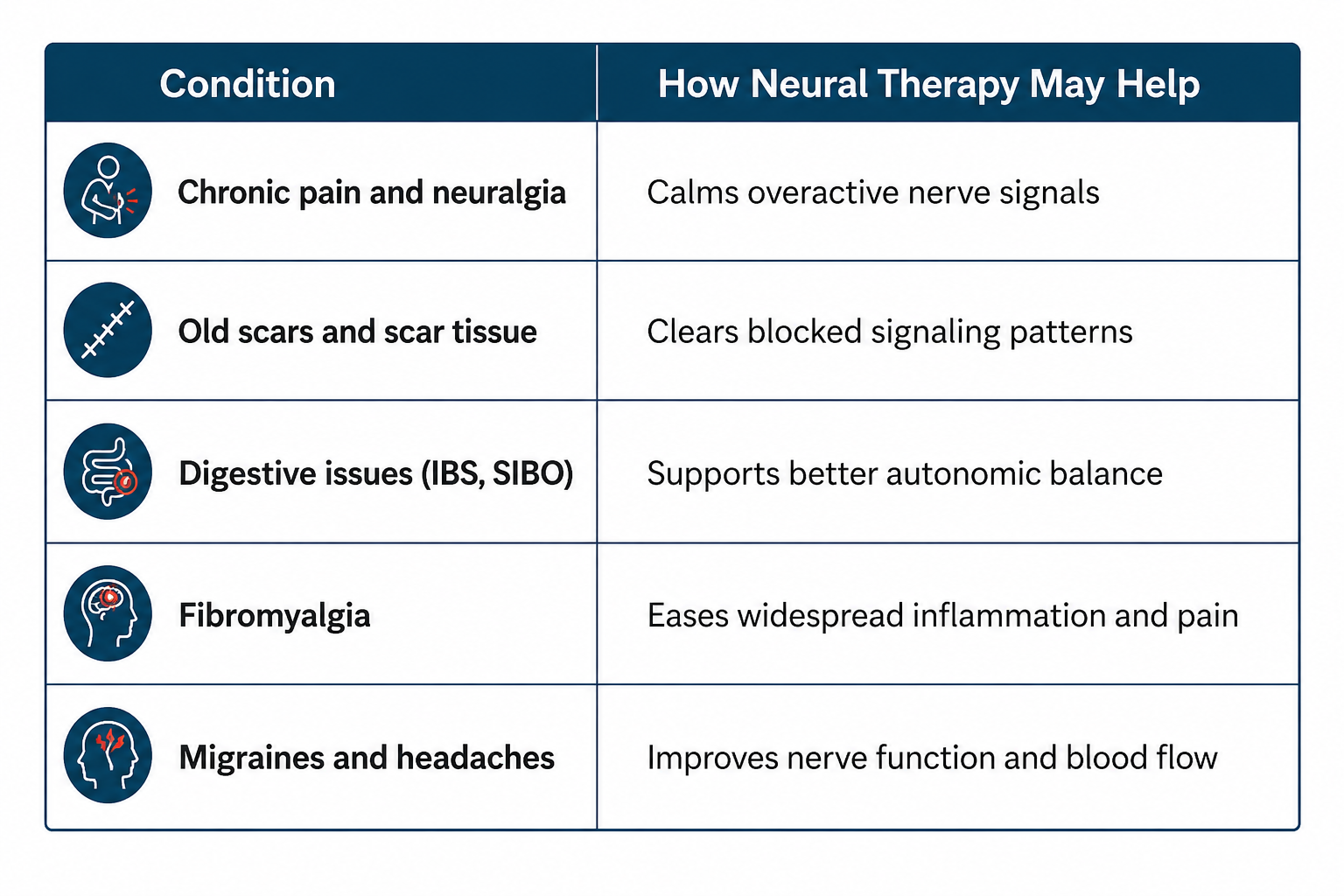
How Neural Therapy Supports Healing, Not Just Pain Relief
Pain relief is usually what brings patients through the door, but it's rarely where the story ends. Here's how the benefits tend to build over time.
It Works With the Body Instead of Against It
Most pain treatments try to override or block a signal. Neural therapy takes a different approach. By calming the nerve itself, it lets the body's own repair systems take over. That's why patients describe the results as feeling less like a quick fix and more like their body finally "reset."
It Can Unlock Healing in Unexpected Places
Because the nervous system touches nearly every organ and tissue, treating one area can sometimes ease symptoms in another.
A provider might use perineural injections near an old surgical scar and watch a patient's digestive symptoms or headaches improve too. This ripple effect is one of the more remarkable things practitioners see with neural therapy.
It Supports Whole-Body Wellness Over Time
Patients who stick with a treatment plan report more than just less pain. Better sleep, more energy, and an easier time managing stress are common side benefits, since a calmer nervous system tends to support the whole body, not just the injection site.
It Fits Naturally Into a Bigger Healing Plan
Neural therapy doesn't have to stand alone. Many providers pair it with physical therapy, nutrition, or other integrative care to help patients heal on more than one level at once. That flexibility is part of what makes it such a valuable addition to a practice.
Neural Therapy vs. Perineural Injection Therapy: What's the Difference?
These terms get used together so that people assume they're the same thing. They're related, but not identical.
Neural therapy is the broader approach. It targets the autonomic nervous system and can involve injections into scars, ganglia, or trigger points to correct signaling problems throughout the body. Perineural injections, on the other hand, are more specific. They focus on injecting around peripheral nerves to treat localized nerve pain and neuropathy.
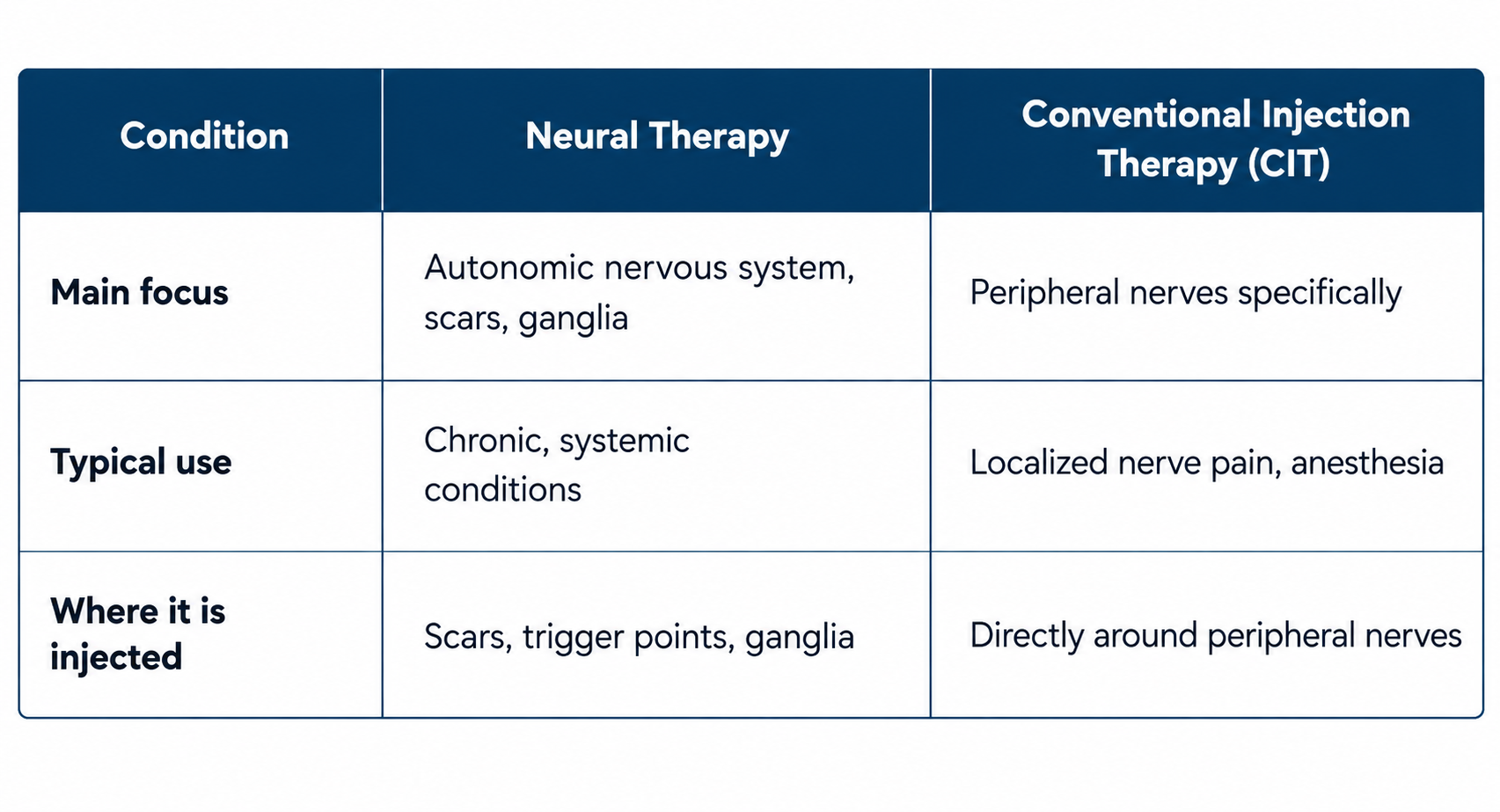
Think of PIT as one tool within the larger neural therapy toolbox. Many providers end up learning both, since the two techniques work hand in hand during the same treatment plan.
Who Should Consider Training in Neural Therapy?
This kind of training isn't limited to one type of provider. If your license allows injections, there's a good chance this technique could fit into what you already do. That includes:
Naturopathic doctors.
Chiropractors.
Nurse practitioners.
Medical doctors.
Osteopathic doctors.
Dentists.
Acupuncturists.
It also doesn't matter where you're starting from:
New to injection therapy? Beginner-level courses walk through anatomy, technique, and patient safety from the ground up.
Already experienced? Advanced classes cover ganglion work and other specialized applications to expand your skill set further.
The key is learning from people who actually use it in daily practice, not just in theory. That hands-on experience is what separates confident, safe providers from ones who are just guessing. It's also the whole reason Learn Neural Therapy built its courses around real clinical scenarios instead of dry lectures. Every class covers:
The anatomy behind each injection.
Patient consent and safety protocols.
How to bill for treatment.
Providers leave ready to use what they learned the very next day.
Final Thoughts: Pain Relief, Healing & Everything In Between
Neural therapy offers real, meaningful benefits for patients dealing with chronic pain and conditions that haven't responded to other treatments. But the upside goes further than pain relief alone. It's a treatment that can support real healing, and that healing shows up consistently when it's delivered by a provider who's been properly trained.
If you're a provider who wants to bring this technique into your practice the right way, Learn Neural Therapy offers both in-person and virtual classes built around real anatomy, real cases, and real confidence behind every injection.
View our classes today and start learning the skills your patients are waiting for.
FAQs
Is neural therapy safe?
Yes, when it's performed by a properly trained provider. The biggest risks come from incorrect technique, not from the treatment itself.
How many sessions of neural injection therapy are usually needed?
It depends on the condition and how the patient responds. Some people notice a difference after one visit, while others need a series of sessions over time.
How is neural therapy different from trigger point injections?
Trigger point injections target muscle knots directly. Neural therapy goes deeper, aiming to correct nervous system signaling that may be causing the pain in the first place.
Can I get certified in perineural injection therapy?
Yes. Providers with an injection scope of practice can take structured courses that walk through anatomy, safety, and hands-on technique from start to finish.