
How Is Neural Therapy Different From Traditional Pain Management?

You've tried the pills. You've tried physical therapy. Maybe you've even had a cortisone shot or two. And yet the pain keeps coming back, like it's got your address memorized. If that sounds familiar, you're not alone and you're also not out of options.
There's a treatment that works in a completely different way from most pain medicine, and it's been quietly used by doctors for close to a century. It's called neural therapy, and it doesn't just try to numb your pain. It tries to fix the wiring that's causing it in the first place.
At Learn Neural Therapy, we train healthcare providers to use this exact approach, and in this article, we'll break down what makes it so different from the pain management most people are used to, what the research says, what it costs, and how it actually works in real practice.
What is Neural Therapy?
Neural therapy is a treatment that uses small injections of local anesthetic, usually a substance called procaine, to calm down damaged or overactive nerves. The injections go into specific spots: scars, nerve clusters, or areas where old injuries never quite healed right.
The idea is simple, even if the science behind it took decades to work out. Nerves carry electrical signals through the body. When a nerve is hurt, whether from surgery, an accident, or years of inflammation, it can start sending bad signals. Those bad signals can cause pain, and not always in the spot where the injury happened. A neural therapy injection is meant to interrupt that faulty signal and let the nerve reset.
The Core Idea Behind Neural Therapy Injection
Every nerve cell holds a small electrical charge when it's resting. Doctors call this the resting membrane potential. When a nerve gets injured, that charge can drop, and the nerve starts misfiring. This kind of injection helps bring that charge back to a normal, healthy level. Once the nerve calms down, the pain signal calms down with it; sometimes for much longer than the anesthetic itself lasts.
What Does Traditional Pain Management Look Like?
Most people's first stop for chronic pain is what's called conventional pain management. This usually includes:
Over-the-counter or prescription painkillers, including NSAIDs and opioids.
Physical therapy and stretching programs.
Corticosteroid (cortisone) injections.
Muscle relaxants.
Surgery, in more serious cases.
These treatments have their place, and many people find real relief from them. But most of them share one thing in common: they work on the symptom, not necessarily the source.
Common Limits of the Conventional Approach
Traditional pain management can run into a few walls over time:
Pain medications usually wear off, and some carry a real risk of dependency.
Cortisone shots reduce inflammation but rarely last more than a few months.
Physical therapy takes time and consistency, and doesn't always reach deep nerve issues.
Surgery is invasive and comes with recovery time and its own set of risks.
None of this means traditional care is wrong. It just means it isn't always built to look at the nervous system as a whole. That's where this approach takes a different road.
Neural Therapy vs. Traditional Pain Management: A Side-by-Side Look
Instead of comparing this treatment to one vague idea of "traditional treatment," it helps to see how it stacks up against the specific methods people already know.
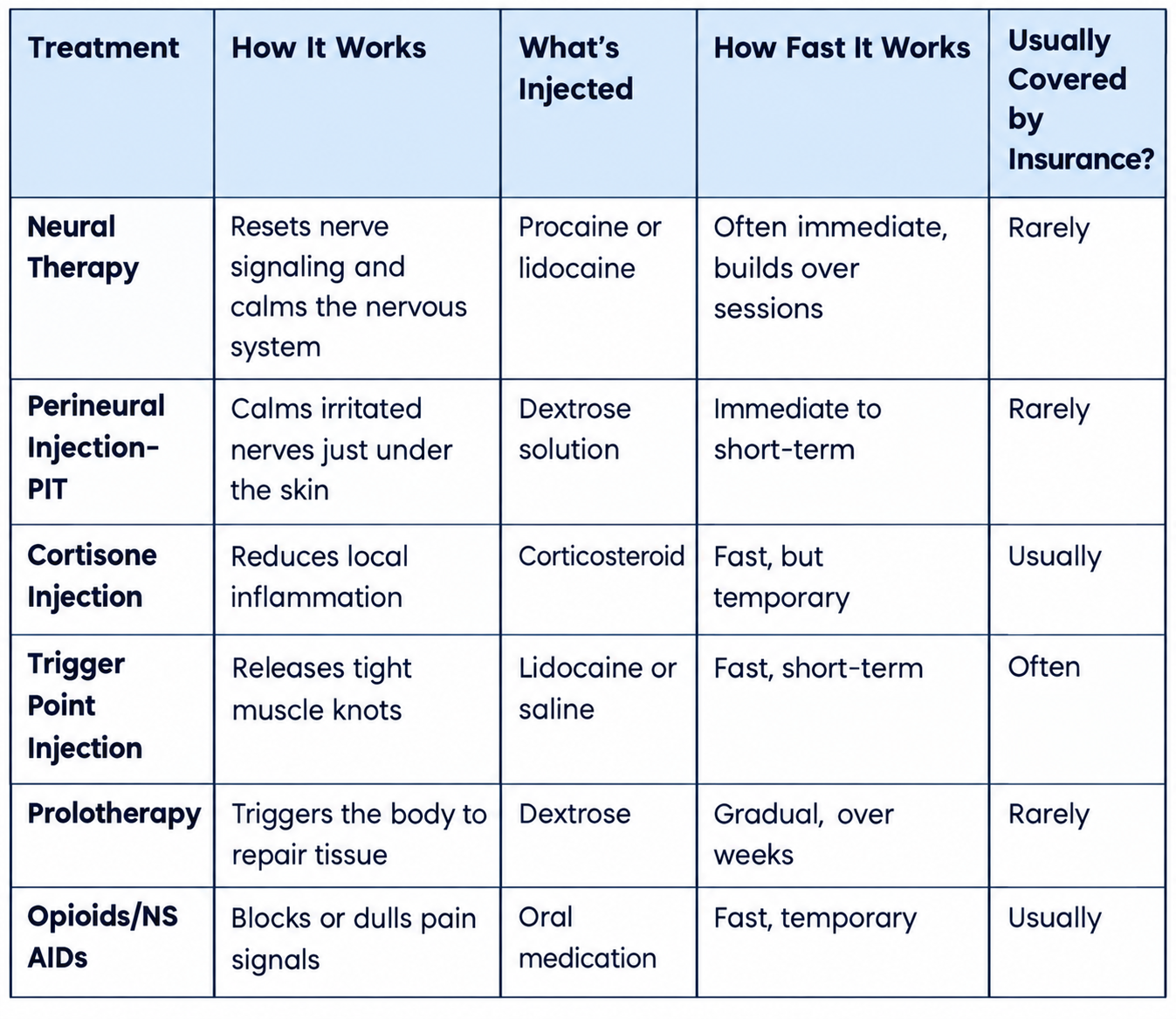
Looking at this table, one pattern stands out. Most traditional options either mask pain quickly or wear off fast. Neural therapy and its close cousin, perineural injection therapy, aim for something longer-lasting by working directly with the nerve itself instead of just quieting the pain signal for a few hours.
Is Neural Therapy Backed by Evidence?
Let's be honest about something: neural therapy isn't as mainstream as taking an ibuprofen, and some critics have called it unproven. It's fair for a reader to wonder if it actually works or if it's just another wellness trend.
Here's what the research actually shows. A long-term study published in BMC Complementary Medicine followed 280 patients with chronic pain that hadn't responded to standard treatment. After a year of neural therapy, nearly three out of four patients needed less pain medication, and many reported major improvement or complete relief. Separate studies on fibromyalgia and chronic low back pain found similar results, with most patients improving within just a handful of sessions.
Is the research perfect? No. Like many hands-on medical treatments, it needs more large, randomized studies to satisfy every skeptic. But the existing evidence is far from nothing, and thousands of practitioners around the world have used it successfully for decades.
Is Neural Therapy Safe?
Any injection carries some risk, and this treatment is no exception. That's exactly why proper training matters so much. When a neural therapy injection is given by someone who understands nerve anatomy and injection technique, the studies published so far report very few complications. The bigger risks tend to show up when treatment is given by someone without the right training, which is a strong argument for choosing a provider who has been through a real certification program.
How Many Sessions Does It Take?
This is one of the most common questions patients ask, and the honest answer is: it depends! In the 280-patient study mentioned above, people needed about nine sessions on average over the course of a year.
Other research on low back pain found that most patients noticed real improvement within two to four sessions. Chronic, long-standing pain usually needs more visits than a recent injury.
Understanding Perineural Injection Therapy
Perineural injection therapy, usually shortened to PIT, is closely related to neural therapy but focuses on nerves just beneath the skin. Instead of procaine, a perineural injection typically uses a mild dextrose (sugar) solution. The goal is similar in many ways: calm an irritated nerve so it stops sending pain signals; but PIT zeroes in on shallow, surface-level nerves that other treatments miss.
What PIT Can Help With
Nerve pain and tingling (neuralgia).
Pain from old scars or surgical sites.
Chronic joint and muscle pain.
Nerve entrapment issues, similar to what's seen in carpal tunnel syndrome.
What Does Neural Therapy Cost & Does Insurance Cover It?
Here's the part most articles skip, and it matters. Right now, most insurance companies in the United States consider neural therapy and perineural injections "unproven," which means they typically don't cover it. This isn't unique to this treatment; options like prolotherapy face the same insurance gap. Because of this, most patients pay out of pocket.
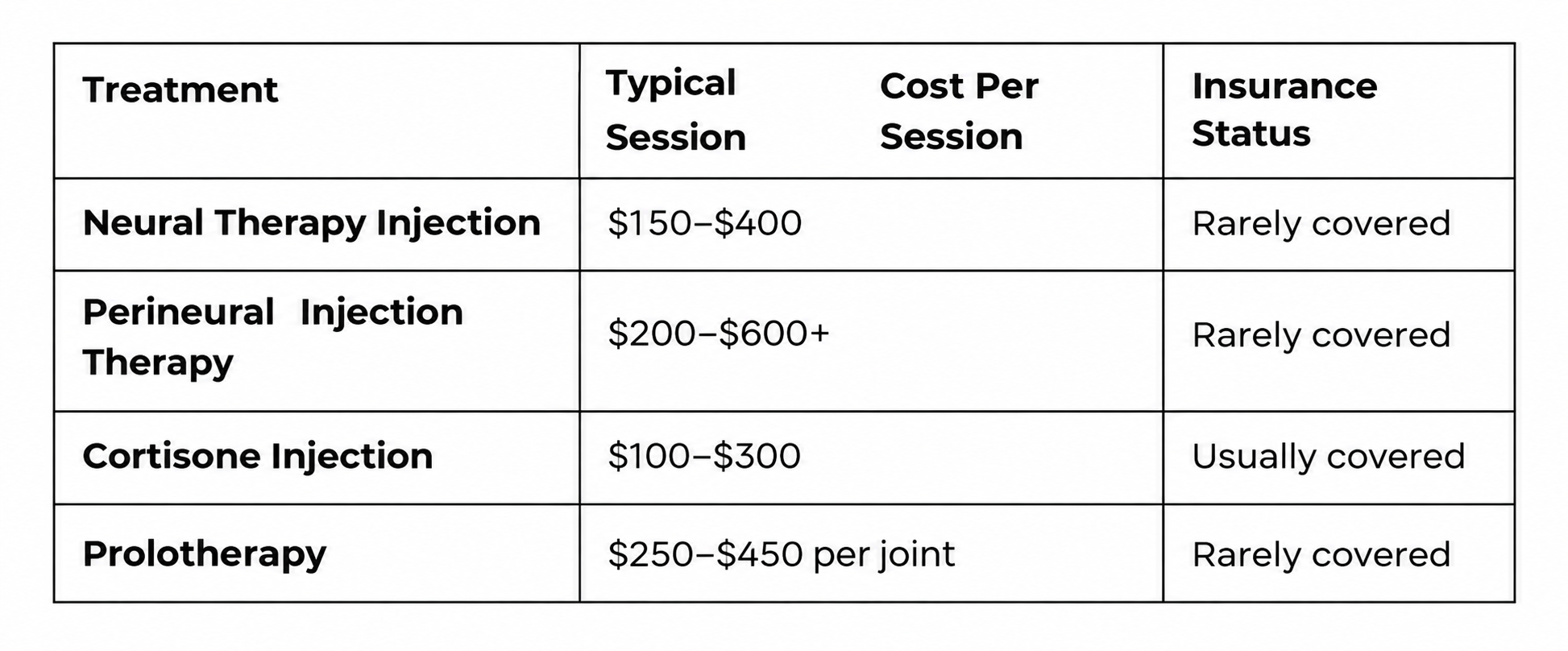
Costs shift depending on your location, how many areas need treatment, and your provider's experience. It's always worth asking for a clear quote before you start.
Who Can Benefit From Neural Therapy?
It has been used to help with a wide range of chronic conditions, including:
Long-term back, neck, and joint pain.
Fibromyalgia.
Migraines and chronic headaches.
Pain from old surgical scars.
Certain digestive and hormonal issues are linked to nervous system stress.
How to Find Qualified Neural Therapy Practitioners
Because this treatment relies so heavily on precise technique, working with well-trained neural therapy practitioners matters more than almost anything else. A skilled provider knows exactly where and how deep to inject, which keeps the treatment both safe and effective.
If you're looking for care, start by checking whether a provider has completed formal, hands-on training rather than a short online overview.
For Providers: Adding Neural Therapy to Your Practice
If you're a healthcare provider reading this instead of a patient, here's the part built for you.
This treatment is open to a wide range of licensed professionals, including naturopathic doctors, medical doctors, osteopathic doctors, chiropractors, nurse practitioners, dentists, and acupuncturists; basically anyone with an injection scope of practice in their state.
Since most patients pay out of pocket for this care, it also tends to fit well into a self-pay or membership-style practice model, which many providers find easier to manage than fighting with insurance billing.
Learning proper injection technique isn't something you want to pick up from a video alone. Learn Neural Therapy offers both in-person and virtual training, covering everything from anatomy and procaine physiology to real clinical case work, consent forms, and billing guidance. Courses range from Level 1 for beginners to advanced classes covering ganglion injections and region-specific PIT training for the upper and lower body.
Ready to Take the Next Step?
Traditional pain management isn't going anywhere, and for plenty of people, it works just fine. But if you've been stuck in the same cycle of temporary fixes, neural therapy offers a genuinely different path; one that treats the nerve, not just the symptom.
If you're a patient, talk to a trained provider about whether neural therapy could fit into your care plan. If you're a provider, Learn Neural Therapy can help you bring this skill into your own practice, with real training from instructors who use it every day.
Explore our classes and see how it could change the way you treat pain!
FAQs
Is neural therapy considered pseudoscience?
Some critics have raised that concern, and it's a fair question to ask about any less mainstream treatment. But published studies, including long-term outcome research, show real benefits for many chronic pain patients, and the treatment has been used clinically for decades.
Does insurance cover neural therapy or perineural injection therapy?
Usually not. Most insurers currently classify these treatments as unproven, so patients typically pay out of pocket.
How is neural therapy different from a cortisone shot?
Cortisone reduces inflammation in one spot and wears off after a few months. This approach targets nerve signaling directly and often aims for longer-lasting change.
Is neural therapy painful?
Most patients describe it as a quick pinch, similar to any small injection. Any discomfort usually fades within seconds.
How many neural therapy sessions will I need?
It varies by condition, but many patients see improvement within a handful of sessions, with more complex or long-term pain sometimes needing more.
Can healthcare providers get certified in neural therapy?
Yes. Providers with an injection scope of practice can become certified neural therapy practitioners through hands-on training programs, offered both in person and online.