
How to Choose the Best Neural Therapy Online Course in the USA 2026?

Pain care is transforming swiftly. Many patients today want treatments that go beyond pills and surgery. They are looking for options that treat the root cause, not just the symptoms. That’s where Neural therapy is stepping in and why more healthcare professionals are searching for the right neural therapy course.
But the problem now is that all courses are different. Some offer real clinical skills. Others barely scratch the surface. You need to choose wisely to invest your time and money.
Platforms like Learn Neural Therapy have made it easier to access structured and high-quality training online. Still, knowing what to look for can make all the difference in your learning and your future practice.
In this guide, you’ll learn how to pick the best course in 2026 without wasting time or settling for less.
What is Neural Therapy & Why It’s Gaining Popularity?
At its core, Neural therapy is a technique that uses small injections with local anesthetics to help reset the nervous system.
It focuses on the autonomic nervous system, which controls many functions in the body. You may experience chronic pain, inflammation and other long-term issues when the system is disturbed. Neural therapy aims to restore balance instead of masking symptoms.
That’s one reason it’s gaining attention across the USA. Healthcare providers are seeing better outcomes in patients dealing with:
Chronic pain.
Migraines.
Joint problems.
Post-surgical discomfort.
Another reason? Patients are asking for it. Integrative and regenerative medicine are no longer niche; they’re becoming mainstream.
Types of Neural Therapy Courses Available in the USA
It helps to understand your options before choosing a course. Every program is not designed for the same level of experience.
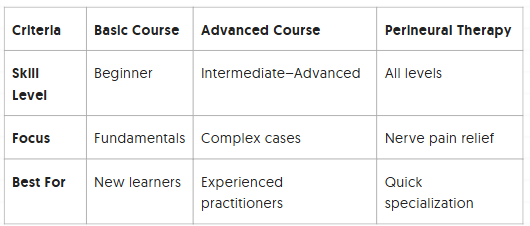
Beginner-Level Neural Therapy Course
This is where you start if you’re new. You’ll learn essential anatomy and physiology in a way that connects directly to treatment. These courses also introduce basic injection techniques, along with safety protocols and proper patient assessment. The goal is to help you feel comfortable with the fundamentals before moving into more advanced procedures.
Advanced Neural Therapy Training
Advanced courses go deeper once you’re comfortable with the basics. At this stage, courses explore more complex injection strategies and how to approach challenging cases. You’ll also learn scar therapy techniques and how they relate to chronic pain and systemic issues. In addition, there’s a strong focus on managing long-term conditions using refined methods. These programs expect prior knowledge, so they move faster and emphasize real-world clinical application.
Perineural Therapy Continuing Education
This is a focused area of training that many professionals explore alongside Neural therapy. Instead of deep injections, it concentrates on superficial nerve treatments using dextrose solutions. This method is used for pain reduction and inflammation control, especially in nerve-related conditions. Because the techniques are less invasive, many practitioners find it easier to integrate them into their existing practice.
Online vs In-Person Neural Therapy Courses
In 2026, online learning is no longer a backup option; it’s the first choice. The trend in healthcare education shows that U.S. medical school enrollment has now exceeded 100,000 students for the first time. Here’s how the two formats compare:
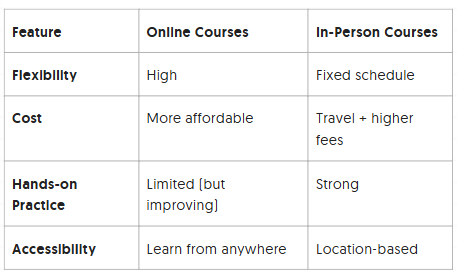
Many modern programs now blend both formats. You might learn theory online and attend optional hands-on workshops later. This hybrid approach works well for busy professionals.
Key Factors to Consider When Choosing the Best Neural Therapy Course
Choosing the right program isn’t just about price or convenience. It’s about long-term value.
Accreditation & Certification
Look for courses that offer recognized continuing education credits. This ensures:
Your training is valid.
Your credentials are respected.
You stay compliant with professional standards.
Instructor Expertise
A course is only as strong as the person teaching it. Ask yourself:
Are the instructors experienced clinicians?
Do they actively practice Neural therapy?
Do they share real-world case studies?
Learning from someone who has been there makes a big difference.
Curriculum Depth
A good course doesn’t rush through topics. It should include:
Detailed anatomy.
Injection techniques.
Safety protocols.
Clinical applications.
It may not prepare you well if a program feels too short or too basic.
Hands-On Learning Opportunities
Even in an online format, practical exposure matters. Look for:
Video demonstrations.
Live sessions.
Optional in-person workshops.
You don’t want to finish a course and still feel unsure about performing procedures.
Clear Learning Path
The best programs don’t stop at one level. They suggest:
Beginner to advanced progression.
Structured modules.
Continued learning options.
This helps you grow step by step.
What to Expect from a High-Quality Neural Therapy Course?
A strong neural therapy course should do more than teach theory. It should prepare you for real clinical work. You can expect:
Step-by-step injection guidance.
Case-based learning.
Treatment planning strategies.
Safety and risk management.
You should finish the course feeling confident, not confused.
Why Choose an Online Neural Therapy Course in 2026?
The way professionals learn has changed. Online education now offers:
Flexible schedules: Learn anytime that fits your routine, allowing you to balance work, patients, and ongoing professional education easily.
Lower costs: Save money on travel, accommodation, and clinic downtime while still gaining high-quality training and valuable clinical skills.
Access to expert instructors worldwide: Connect with experienced practitioners globally and learn advanced techniques without being limited by your location.
You don’t need to pause your practice or travel across the country to gain new skills. For many, it’s the most practical way to learn.
Benefits of Adding Neural Therapy to Your Practice
Learning Neural therapy can open new doors in your career. Here’s how:
You can treat chronic pain more effectively.
You expand your service offerings.
Patients see better outcomes.
Your practice becomes more competitive.
It’s not just about learning a skill, it’s about growing your impact. Research shows that effective treatments targeting the nervous system can reduce pain by 30% or more for many patients. This level of pain relief is important for those dealing with chronic pain.
Comparison Table: Choosing the Right Course
Why Learn Neural Therapy Stands Out?
With so many options available, it helps to choose a platform that delivers both quality and structure. Learn Neural Therapy stands out because it focuses on real clinical training, not just theory. Their programs provide:
Step-by-step learning paths.
Courses for different experience levels.
Practical demonstrations.
Continuing education opportunities.
Their structured approach helps you move forward with confidence whether you are a beginner or looking to advance.
In a Nutshell,
Choosing the right neural therapy course is more than a simple decision; it’s an investment in your future. The right training can help you grow your practice and stay ahead in a fast-changing healthcare landscape.
In 2026, learning is more flexible than ever. But flexibility should never come at the cost of quality. That’s why platforms like Learn Neural Therapy are becoming a trusted choice for professionals who want structured and practical.
Now is the time to take the next step to expand your skills and offer better care. Explore a course that fits your goals, commit to learning, and start building a stronger, more capable practice today.
FAQs
1. Who can enroll in a neural therapy course?
Most courses are designed for licensed healthcare professionals such as doctors, chiropractors, naturopaths, and dentists.
2. Is an online neural therapy course effective?
Yes. Many online courses now include detailed demonstrations and optional hands-on training to support learning.
3. How long does it take to complete a course?
It depends. Some courses take a few days, while others are spread over several weeks or months.
4. What is the difference between Neural therapy and perineural therapy?
Neural therapy typically uses local anaesthetics to reset nerve function, while perineural therapy focuses on treating nerve pain using dextrose-based injections.
5. Is perineural therapy continuing education necessary?
It’s not required, but it’s a valuable addition if you want to expand your pain management skills.