

You’ve rested it, stretched it, or maybe you’ve taken pills for it. But your back still hurts!
Many back pain treatments work like muting a smoke alarm. The noise stops for a while, but nobody checks where the fire started. Neural therapy takes a different route. It looks for the nerves and tissues that may be keeping pain alive, then treats them with small, precise injections.
This guide covers how it works, who it may help, and what research says so far. It comes from Learn Neural Therapy, a Portland, Oregon training center that teaches healthcare providers these methods. By the end, you’ll know which questions to ask before you book anything.
Why Many Back Pain Treatments Only Chase the Pain
Treating the sore spot
Most care begins where it hurts. Pills calm swelling. Rest eases strain. A steroid shot numbs one area. These steps help many people, and sometimes they are exactly right. But they share one assumption: the sore spot is also the source.
That isn’t always true. Pain can travel. Picture a kinked garden hose. The water slows far from the bend, yet the bend is the real problem. An irritated nerve in the hip can send signals that feel like a back problem.
When “non-specific” means “no clear answer”
Roughly 9 in 100 people worldwide live with chronic low back pain. Many cases have no clear cause on a scan, so the diagnosis becomes “non-specific low back pain.” That label means doctors couldn’t find one cause. It doesn’t mean nothing is wrong.
Nerves that get overlooked
The superior cluneal nerve runs over the top of the hip bone, just above the buttocks. One study estimated it plays a part in 12 to 14 percent of low back pain, yet it is usually missed. The piriformis muscle, deep in the hip, is another suspect. When it irritates a nearby nerve, the result can mimic back trouble.
What Is Neural Therapy?
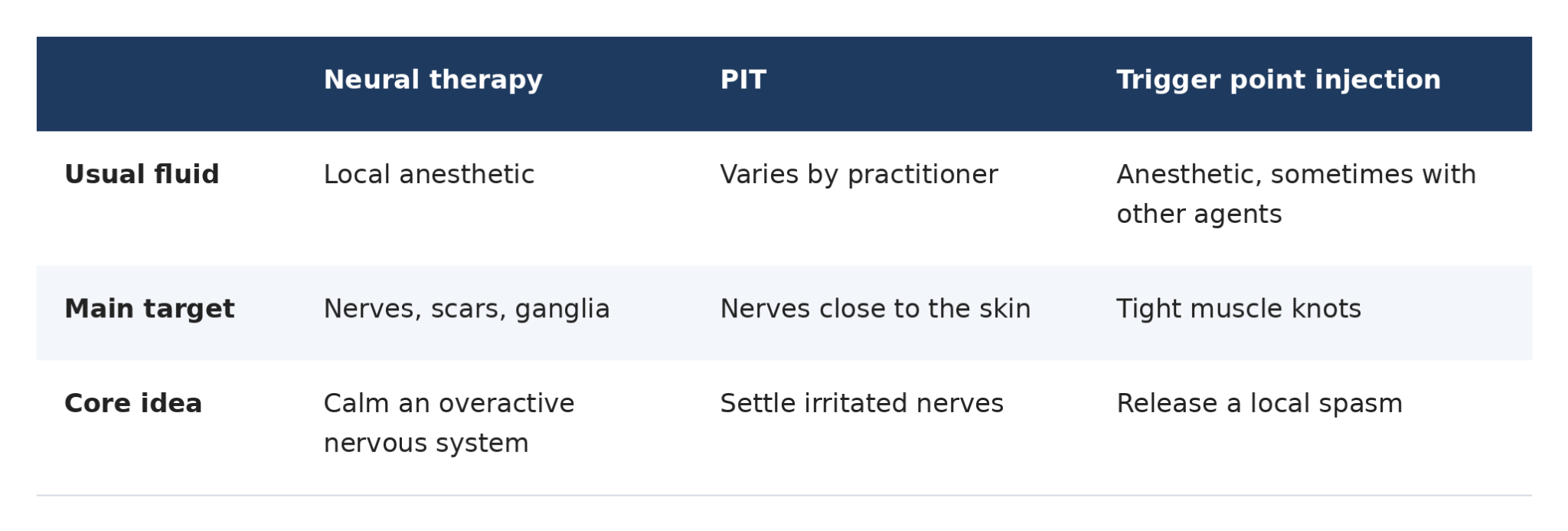
Neural therapy uses small injections of a local anesthetic, usually procaine, to treat pain and other long-term problems. Procaine is a numbing medicine, a cousin of what dentists have long used. The method began in Germany, and European doctors have used it for more than 50 years.
Where the injections go
A practitioner may inject into tight muscle knots, nerves, scars, or clusters of nerves called ganglia. Three common approaches are:
Local: near the painful spot.
Segmental: areas linked to the same part of the spinal cord.
Interference field: a scar or tissue elsewhere that may keep the nervous system on edge.
Why the nervous system matters
Long-lasting pain can leave the nervous system stuck on high alert. Experts call this central sensitization. Neural therapy aims to calm that overactive signaling. The injection also works as a clue. If pain eases right away, the practitioner learns something about where the problem lives.
Neural Therapy Benefits for Back Pain
People look into neural therapy benefits when other care has stalled. Here is what practitioners are aiming for.
A clearer view of the cause
Because relief after an injection can point to a nerve or tissue involved, the visit can double as a search for the driver of your pain, not only a treatment.
Treating more than one spot
Back pain rarely lives alone. A stiff hip, an old surgical scar, or a tender nerve can all feed it. Neural therapy lets a practitioner address several of these in one plan.
A partner to other care
It doesn’t replace a proper diagnosis, exercise, or physical therapy. Practitioners pair the injections with movement work, so the relief can open a window for stretching and strengthening.
Possible need for fewer pain pills
Some patients report using less pain medication after treatment. Results vary, and no one can promise a specific outcome.
Perineural Injection Therapy: A Nerve-Focused Option
Oftentimes called PIT, this method places tiny injections just under the skin, right beside irritated nerves. Dr. John Lyftogt, a physician from New Zealand, introduced it. You may also see it called perineural therapy. The idea is that small nerves near the skin can become irritated by strain, injury, or surgery, and calming them may ease the pain signals sent to the spine. Some practitioners use a sugar-based solution called dextrose, while others choose different fluids.
Where PIT fits in back pain
Practitioners use PIT for the low back, hips, buttocks, and tailbone area. In one study of nerve pain near the lower back, dextrose injections beside the superior cluneal nerve reduced pain and disability, and did better than a steroid shot.
How the options compare
What Does the Evidence Say?
The research is growing, but it isn’t settled. Here’s a quick look.
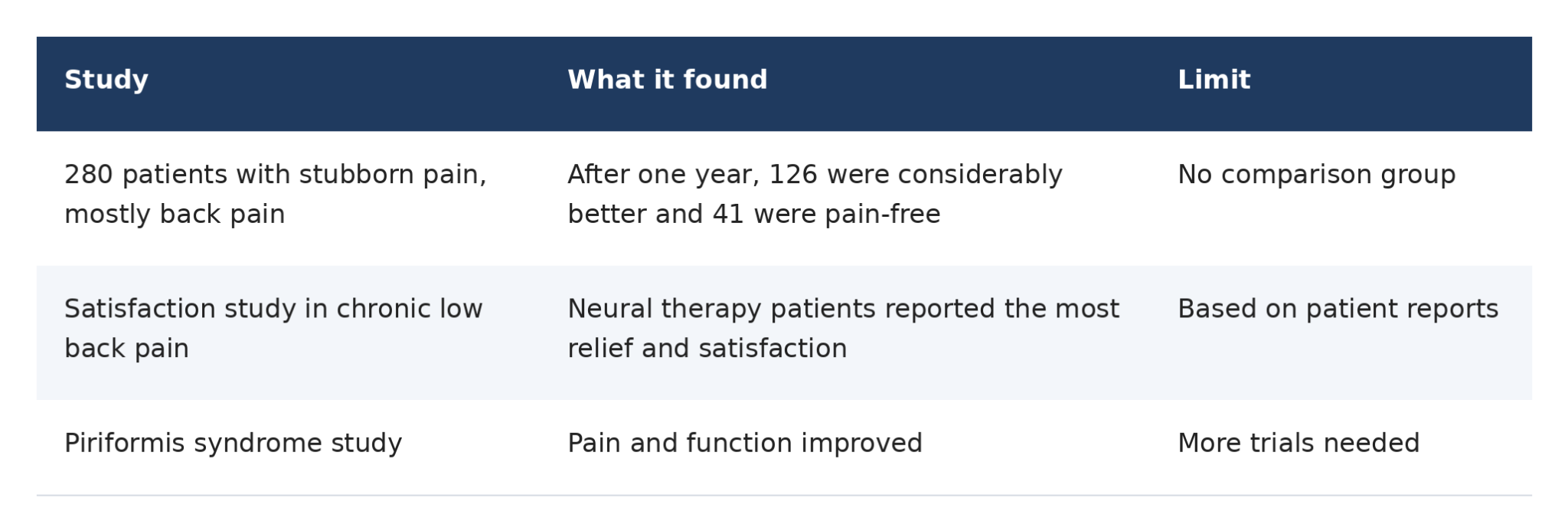
Insurance reviewers have called the studies limited, and a Cochrane review found mixed results for prolotherapy, a related injection method. Research on perineural therapy is newer still, and much of it comes from small studies and case reports.
Some practitioners add that each injection plan is tailored to the person, which makes standard blinded trials hard to run. A fair summary: promising, not proven. That is why a well-trained clinician matters.
What to Expect at an Appointment
Your first visit starts with questions and a physical exam. The practitioner checks your back, hips, and any scars, then injects with very fine needles. Afterward, you may feel soreness, warmth, or a short wave of emotion.
In one study, these reactions lasted from minutes to two days. Tell your clinician about heart conditions, allergies to anesthetics, and any medicines you take, since these may affect whether treatment is a good fit.
How to Find Neural Therapy Practitioners
Not every clinic offers this care, so a little homework pays off. When you search for neural therapy practitioners, ask four questions:
What training do you have in injection techniques?
What is your professional license?
Which approaches do you use for back pain?
How will we track my progress?
For Healthcare Providers: Train in Neural & Perineural Injection Therapy
Learn Neural Therapy offers in-person and virtual classes for MDs, DOs, NDs, PAs, NPs, chiropractors, and acupuncturists. The training mixes injection anatomy with clinical instruction, so you practice in real clinical settings. Level 1 teaches beginning injection technique. Level 2 covers advanced clinical uses, including ganglion and specialty injections.
A perineural injection therapy course for the lower body focuses on the hips, gluteals, low back, sacrum, and pelvic pain. You can also hear clinicians discuss the science on the podcast The Point of Medicine and watch demonstrations on the YouTube channel.
Take the Next Step
Back pain that keeps coming back deserves more than a muted alarm. Neural therapy practitioners look for the nerves and tissues behind the pain, not just the spot that hurts. The research is still growing, so choose a trained provider and keep your expectations realistic.
Learn Neural Therapy is here to help from both sides. Patients can use the Find a Provider page to locate a practitioner. Healthcare providers can view our classes and start building these skills today. Browse the classes or find a provider now.
FAQs
What is neural therapy used for in back pain?
Practitioners use it for long-lasting or hard-to-explain back pain, especially when nerves, trigger points, or scars may be involved.
Is neural therapy the same as perineural injection therapy?
Not exactly. Both use injections. Perineural therapy (PIT) targets nerves just under the skin, while neural therapy also treats scars, ganglia, and other tissue.
How many sessions will I need?
It varies. Studies have used from five to ten sessions, and your practitioner will adjust the plan to your response.
Is it backed by science?
Early reports of neural therapy benefits are encouraging, but large, high-quality trials are still needed. Ask any practitioner how they measure progress.
Who can perform these injections?
Licensed healthcare providers with injection training, such as physicians, nurse practitioners, chiropractors, and acupuncturists, depending on local rules. Always ask about training and license.